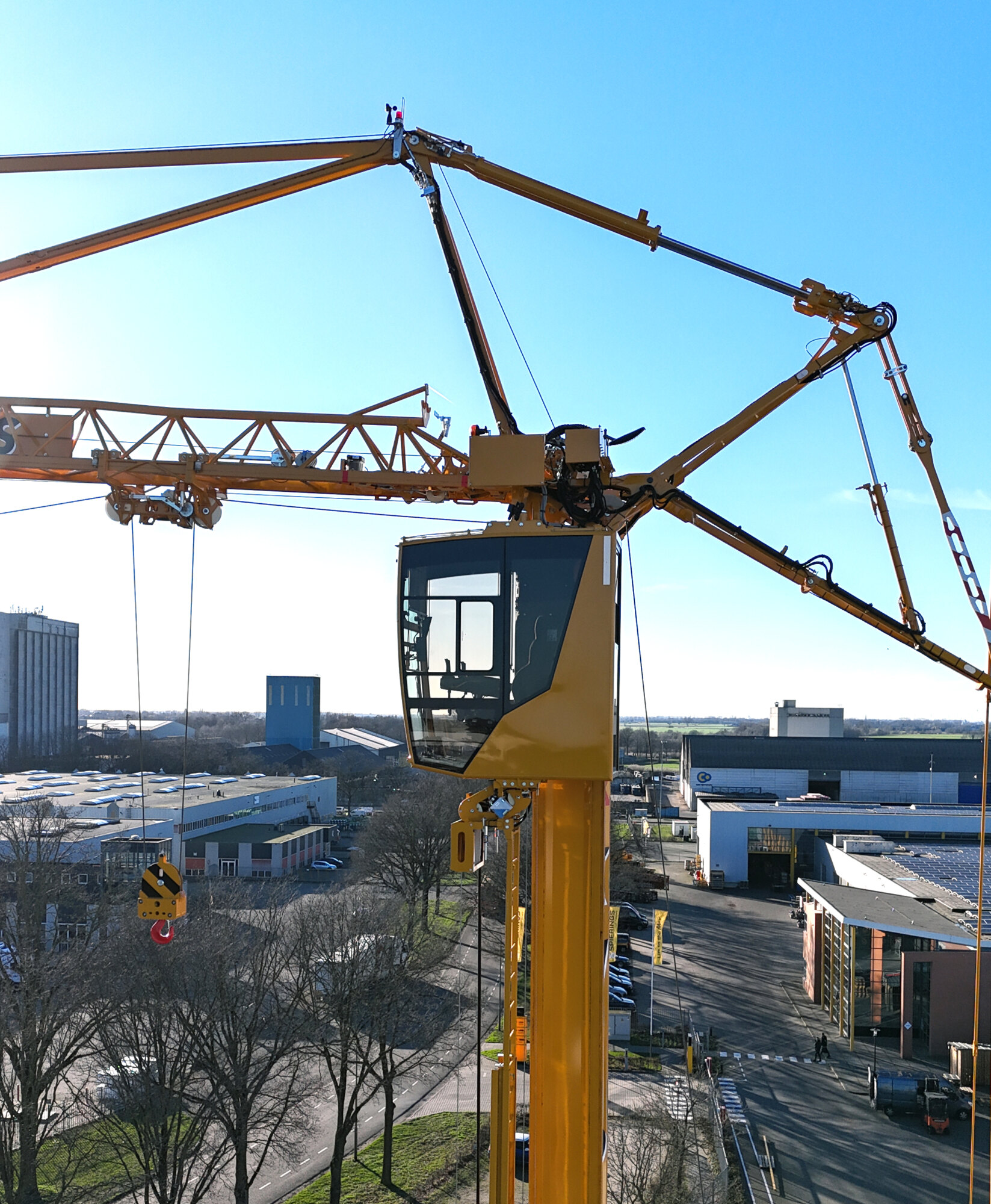
A crane operator may have the best view on the construction site. From the crane cab, the operator oversees the entire project and directs lifting operations with precision. While everyone on the ground looks up, the operator maintains a clear overview from above. The crane cab is more than just a place to sit. It is the working environment where comfort, ergonomics and safety come together. That is exactly why ergonomics in a mobile tower crane plays such an important role: not only for comfort, but also for performance, safety and long-term employability.
What does an ergonomic crane cab in a mobile tower crane mean?
Ergonomics in a crane cab means that working posture, controls and sightlines are aligned with the operator’s body and movements. The goal is to reduce physical strain and support controlled lifting operations.
A crane operator often works for hours at a time in the same position while carrying out lifting movements with a high degree of precision. Small shortcomings in support or posture can lead to physical strain over time. Important factors include the position of the seat in relation to the controls, support for the forearms and wrists, clear sightlines without excessive twisting movements, and a stable seating position during repetitive lifting operations. An ergonomically designed crane cab minimises unnecessary muscle strain and supports a natural working posture.
Ergonomics as a performance enhancer
Ergonomics is sometimes seen mainly as something that improves comfort. In a mobile tower crane, it goes beyond that. The way an operator sits and works has a direct impact on how accurately and safely lifting can be carried out. Lifting operations require control and repetition. The same movements are often performed for hours on end. When the working posture is not right, physical strain increases and movements become less fluid. A well-designed crane cab supports stable operation, precise load positioning and sustained concentration throughout the working day. Less fatigue means more control.
When an operator is seated in a relaxed and stable position, crane movements remain controlled. Small steering inputs can be carried out accurately without unnecessary force or tension. Ergonomics therefore affects not only comfort, but also the stability of the lifting movement, control of the load, and the safety and efficiency of the working process.
Working posture and physical strain in the crane cab
When designing a crane cab, the interaction between the crane operator and the machine is central. The cab functions as the control platform where all systems come together. The operator’s position is leading in this design.
A stable seating posture helps prevent strain on the back, shoulders and neck. Several elements play an important role in ergonomic cab design.
Fully adjustable seat
A fully adjustable seat makes it possible to tailor seat height, seat depth, seat angle and backrest angle to the operator. This creates a stable foundation for long periods of precise lifting work.
Full forearm support
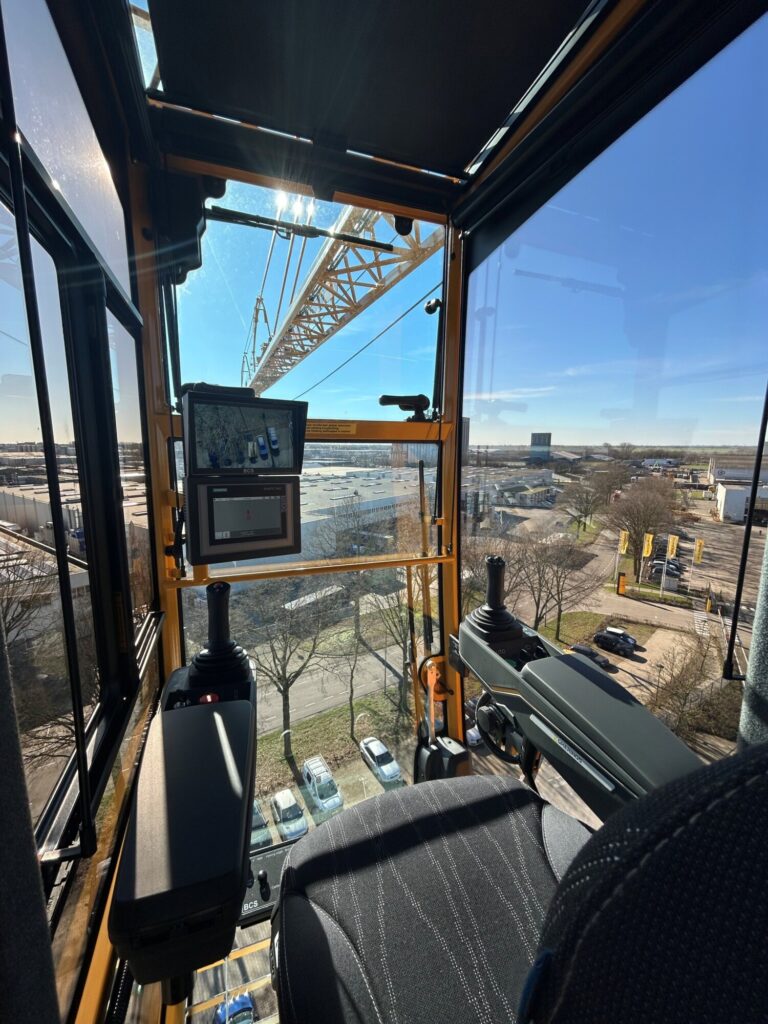
During repetitive lifting operations, full forearm support is essential. When only the hand or wrist is supported, tension builds up in the shoulders and upper back. Full forearm support reduces muscle tension and increases control over joystick movements. This results in more accurate and smoother operation.
Logical positioning of controls
The controls must be within a natural reach. Overstretching or constant corrective movements increase physical strain. An ergonomically designed crane cab is characterised by intuitively positioned joysticks, logically arranged functions and easy-to-read displays, without the upper body constantly having to twist. When the controls match the operator’s natural posture, operation becomes calmer and more efficient.
Visibility and ergonomics go hand in hand
Ergonomics is not only about sitting and operating the crane. Visibility also plays an important role in how physically demanding the work is. When an operator has to bend, twist or lean forward to follow the load properly, extra strain is placed on the neck, shoulders and back. That is why glass surface area and sightlines are an essential part of cab design.
Extensive glazing and clear sightlines allow the operator to remain seated in a natural position while maintaining a clear view of both the load and the working environment. This reduces physical strain and supports fast, direct visual control.
Climate and noise levels in the crane cab
The interior climate also affects how comfortably and how well an operator can concentrate while working. Temperature fluctuations, draughts or outside noise require extra energy and can reduce concentration. Climate control and good insulation maintain a constant temperature and limit disturbances from outside. Electrically heated front windows prevent visibility from being obstructed by condensation or temperature differences in the glass. By controlling these factors, the crane cab remains a stable and pleasant working environment.
The crane cab as a future-proof workplace
At Spierings, ergonomics is not seen as a separate feature, but as part of the overall cab concept. The cab layout is based on how operators work and what they need to lift safely and in control over long periods of time. Ergonomics results from the right balance between working posture, visibility, controls, safety and climate control. When these elements are in harmony, they create a stable and comfortable workplace for the crane operator.
Want to know more about the Spierings crane cab?
Would you like to learn more about how ergonomics is integrated into the Spierings crane cab? Visit our detailed crane cab page or contact us.