


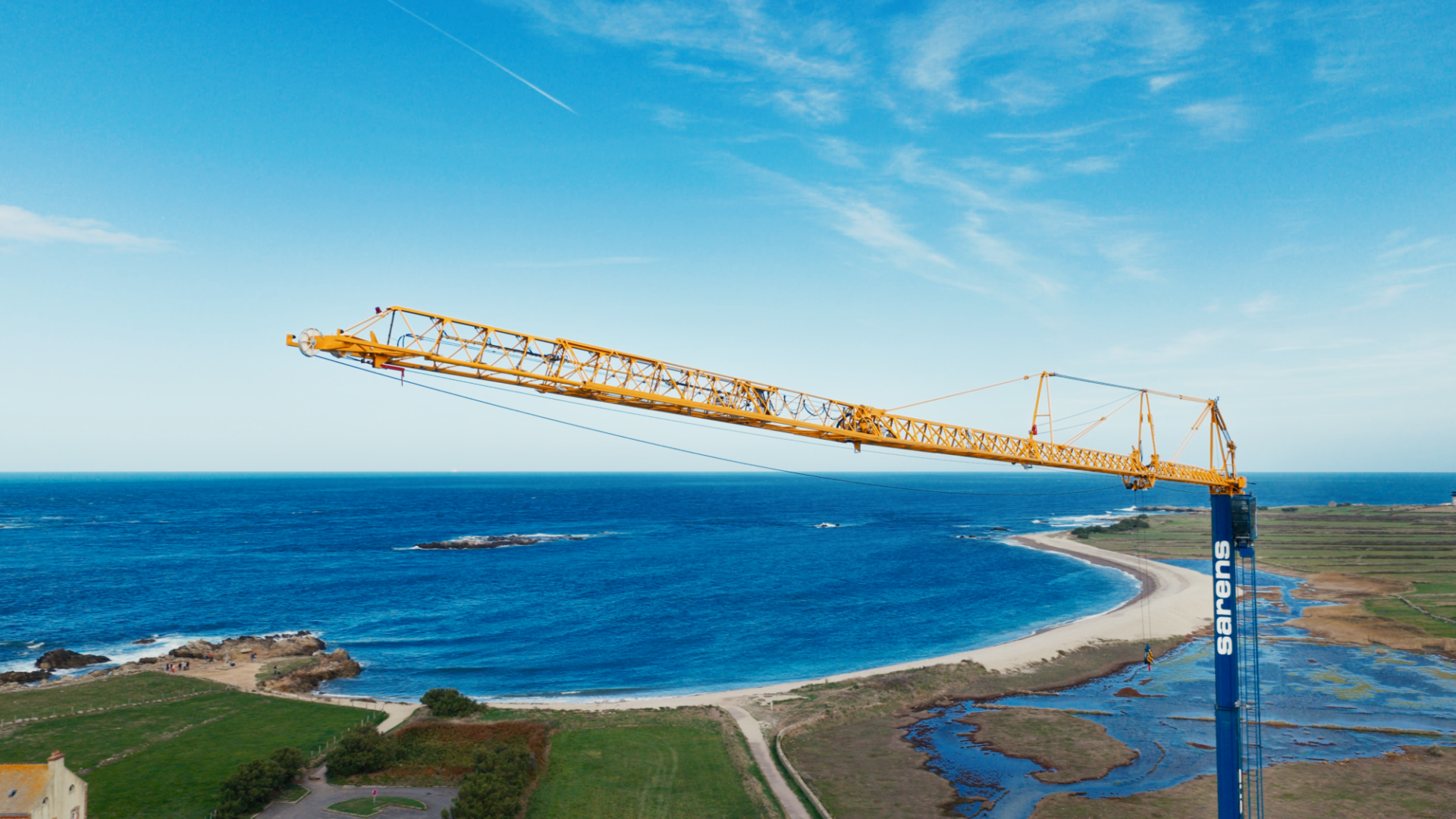
Unique tower height and jib length on a 5-axle crane
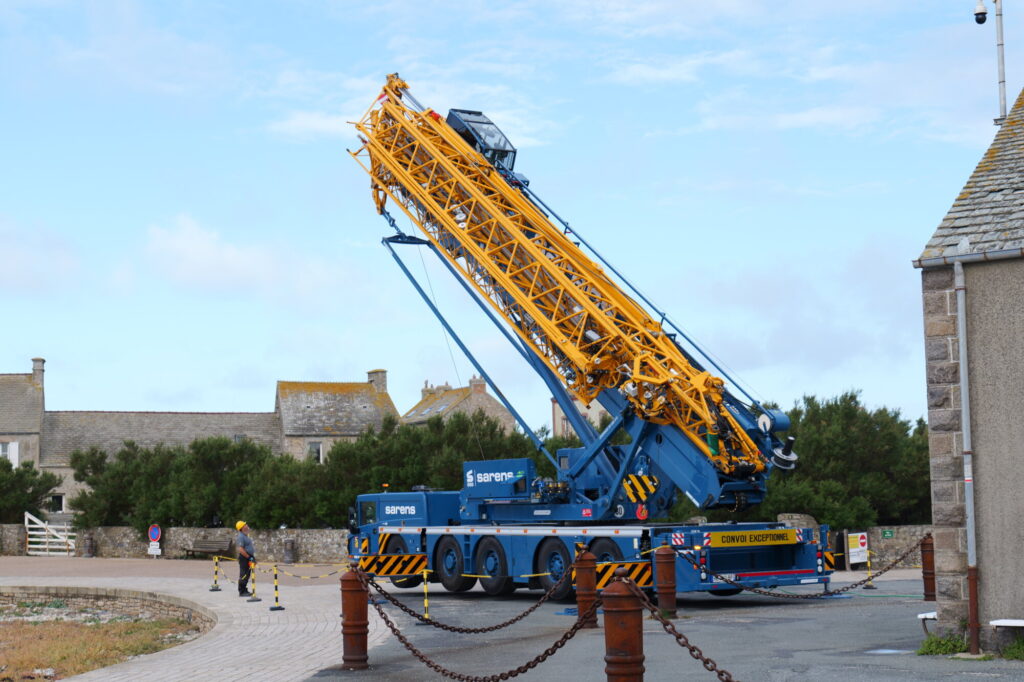
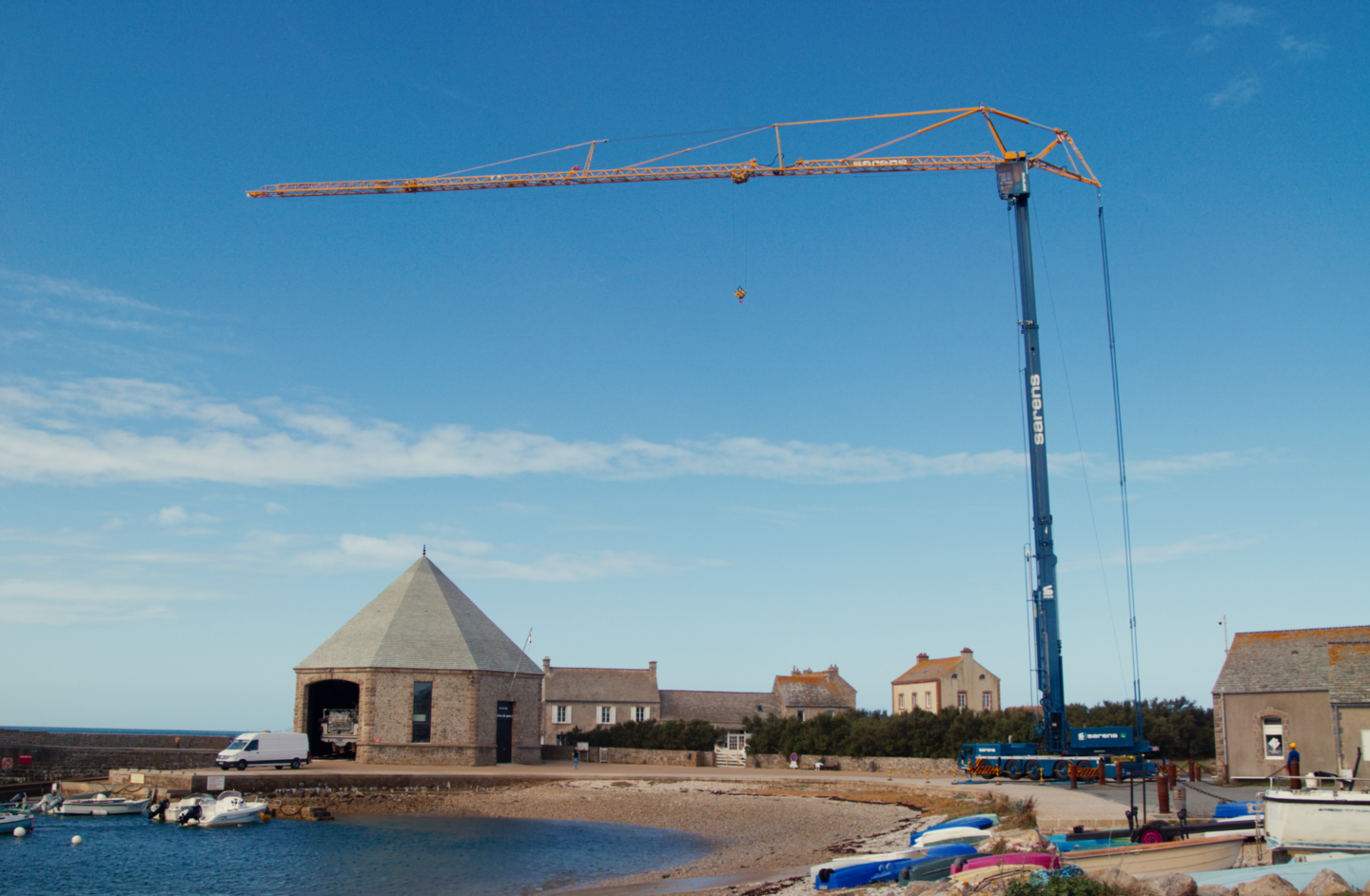
The Spierings SK1265-AT5 eLift delivers maximum lifting performance while maintaining excellent mobility. With a transport weight of less than 60 tonnes, this mobile tower crane can operate in areas where heavier cranes face restrictions or are not permitted.
Specifications
| Maximum load | 10.000 kg (up to 13.2 m) |
| Tip load | 1700 kg |
| Jib length | 60 m |
| Height under jib | 40.5 m |
| Maximum lifting height | 64.2 m (30° luffed jib) |
| Set-up time | 11 min |
Downloads
Video

The advantages of the SK1265-AT5 eLift
The 5-axle chassis, combined with optimised axle spacing and an axle load of 12 tonnes per axle, ensures efficient weight distribution without compromising performance. This makes the SK1265-AT5 eLift ideal for projects where impressive lifting capacity must go hand in hand with accessibility.
- Maximum lifting capacity on 5 axles
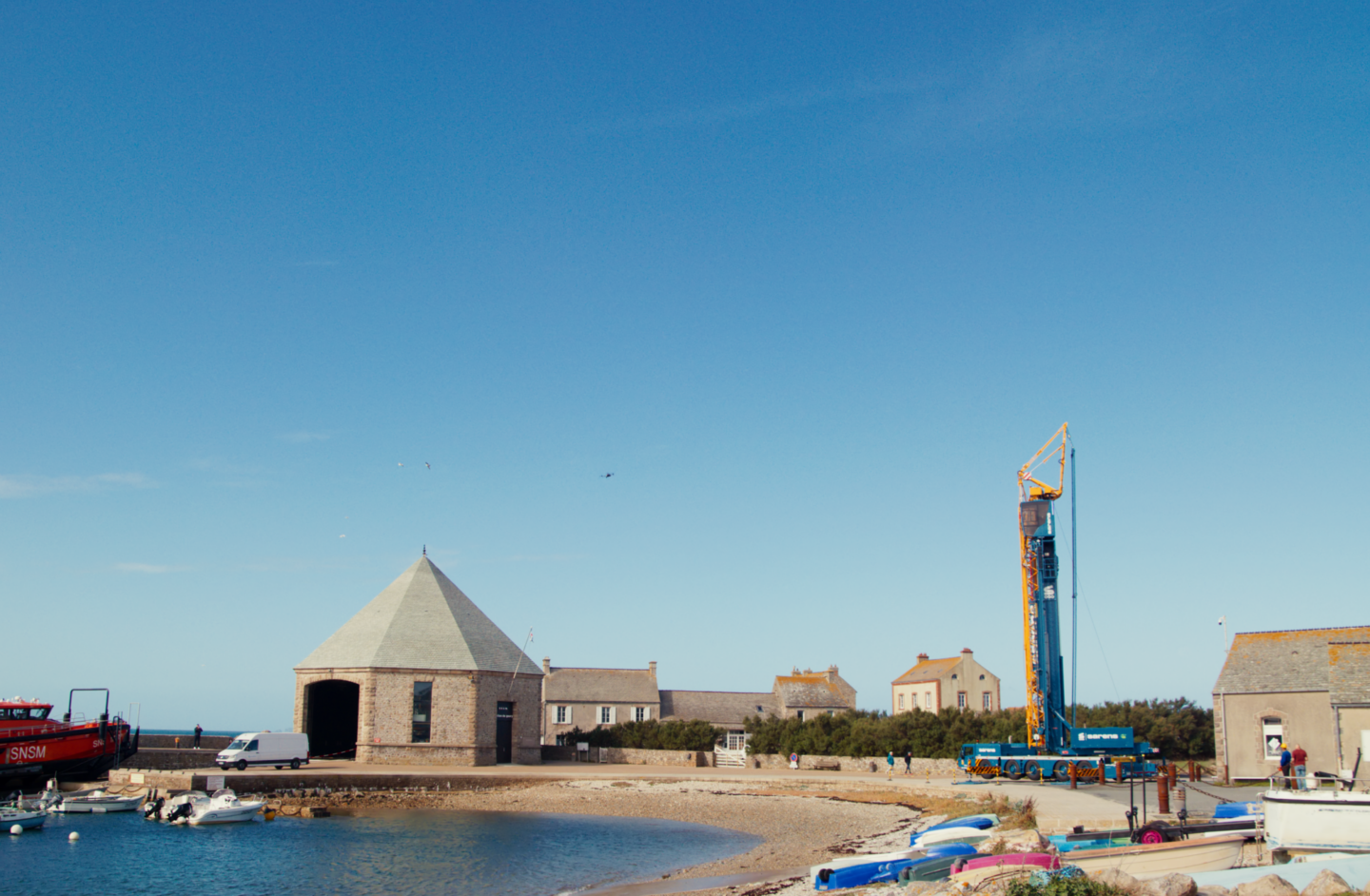
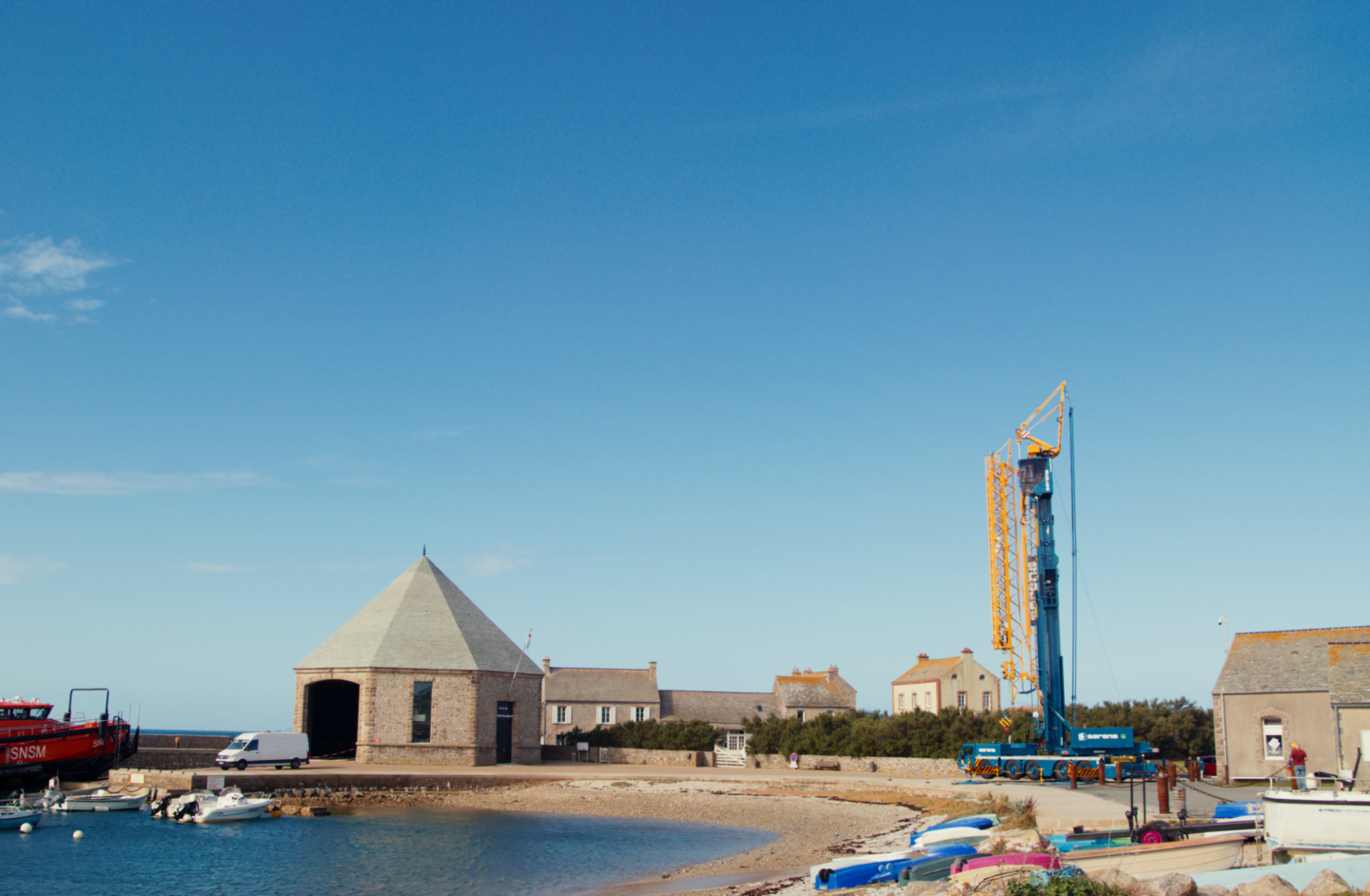
- 60-metre jib length and 37-metre tower height
- Optimised axle spacing and all-wheel steering for maximum versatility
- Automatic ballast detection for safe, error-free configuration
- Electric lifting as standard: quiet, low-emission and future-ready
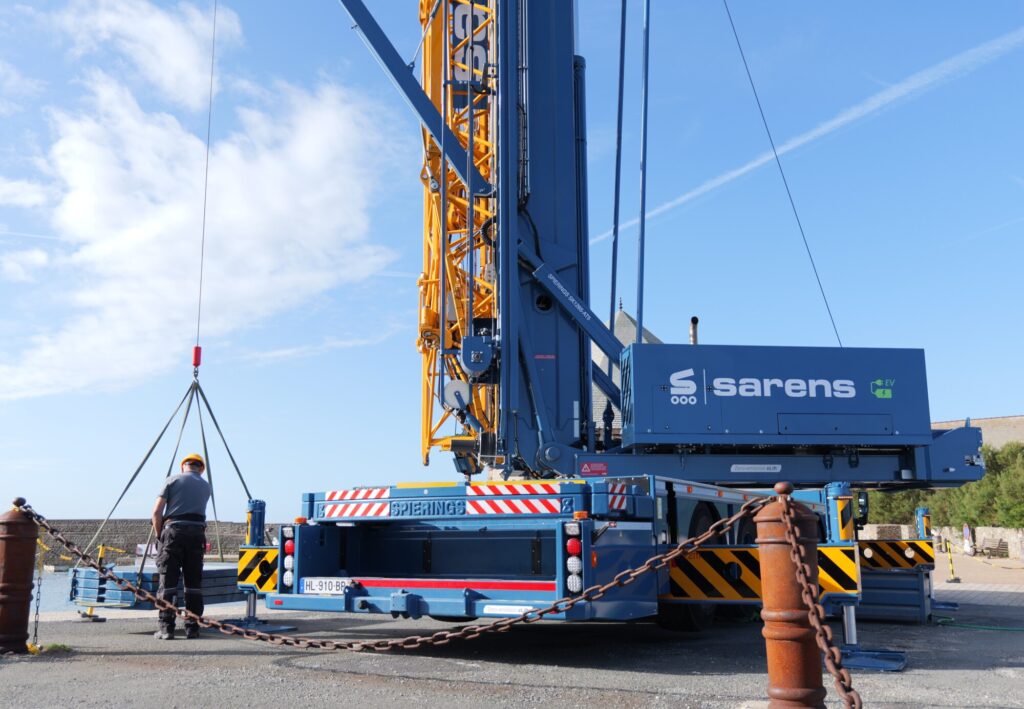
- Integrated auxiliary crane with steel outrigger pads for independent setup


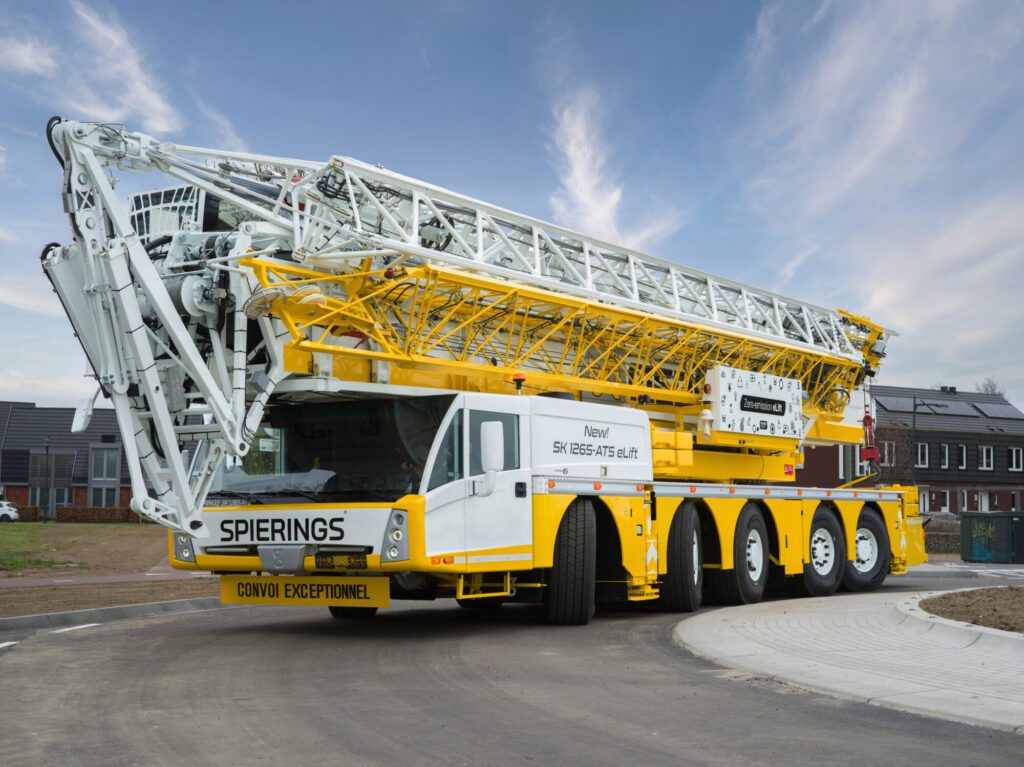
Maximum electric lifting capacity on 5 axles
The SK1265-AT5 eLift offers a maximum lifting capacity of 10 tonnes at a radius of up to 13.2 metres, a jib length of 60 metres and a tip load of 1.7 tonnes. This mobile tower crane delivers performance normally associated with a heavier axle configuration, such as the SK1265-AT6 eLift, while remaining within the limits of a 5-axle chassis.
Thanks to the eLift system, lifting operations can be carried out entirely electrically. This results in less noise, minimal emissions and precise crane movements, without compromising lifting capacity or speed.
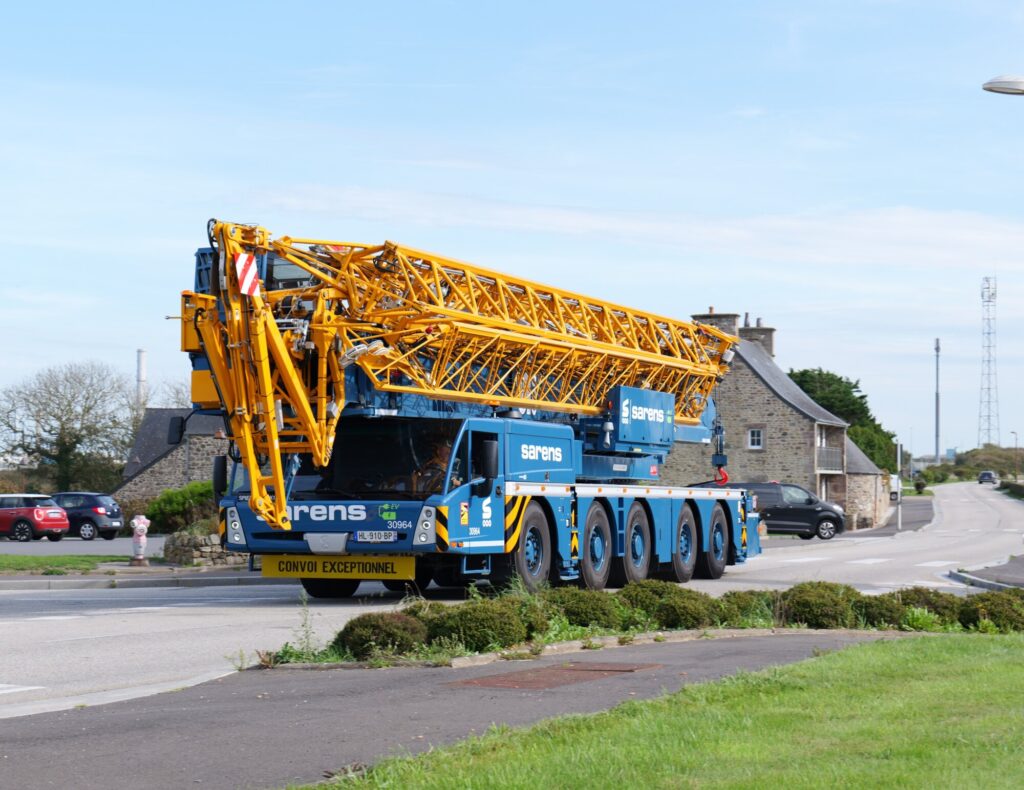
Axle loads and axle spacing
The SK1265-AT5 eLift has a transport weight of less than 60 tonnes, keeping it within important weight limits for operation on public roads. Combined with optimised axle spacing and weight distribution, the total weight is efficiently distributed across the chassis, allowing the crane to comply with permitted axle loads.
Axle load refers to the amount of weight each axle transfers to the road. By limiting the load to 12 tonnes per axle and distributing the weight efficiently across the chassis, the SK1265-AT5 eLift is better aligned with international transport regulations. This can result in more favourable transport conditions and greater accessibility to locations where heavier cranes face additional restrictions.
The specific axle configuration, with short distances between the axles, contributes to optimal weight distribution and supports both stability and performance. All axles are steered, providing maximum manoeuvrability and allowing the crane to be positioned precisely, even in confined urban environments.

Automated ballast configuration
The SK1265-AT5 eLift is equipped with the Automatic Ballast Detection System. This system uses a measuring axle to continuously detect and monitor the installed ballast. Based on these measurements, the correct load chart is automatically selected.
This eliminates the need for manual input and prevents errors in crane configuration. The crane operator can focus entirely on the lifting operation, while the crane always operates with the correct settings.
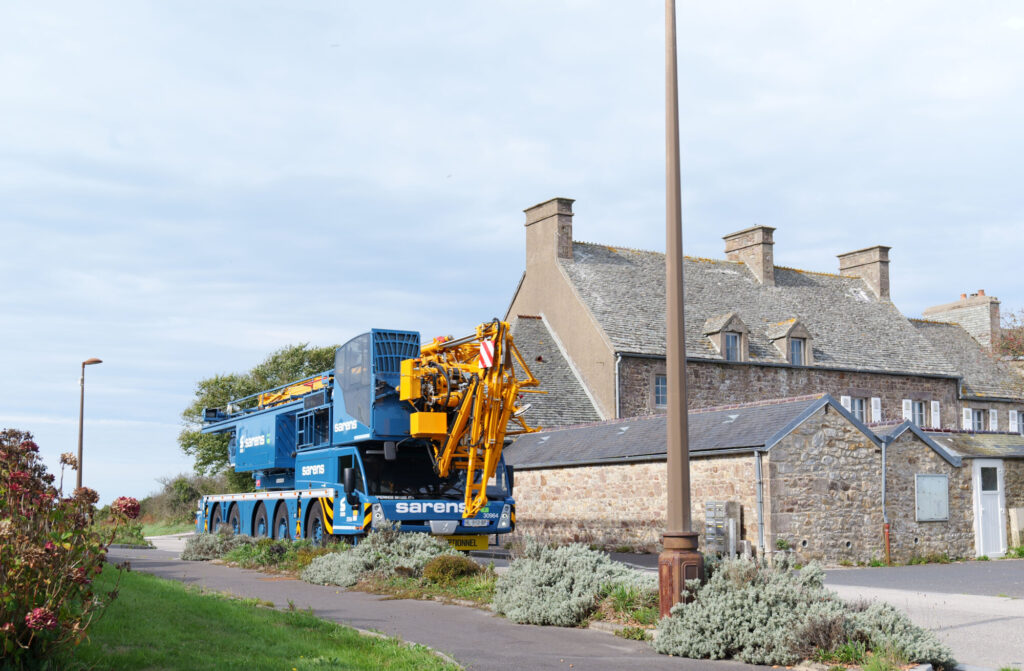
Flexible crane configurations
The Spierings SK1265-AT5 eLift offers multiple crane configurations, allowing it to be easily adapted to specific lifting operations and site conditions.
From a transport configuration of less than 60 tonnes for travelling on public roads to on-site configurations of less than 64.6 tonnes, 66.3 tonnes and 69.7 tonnes, only the required ballast is used, avoiding unnecessary weight and additional logistics.
Combined with the Automatic Ballast Detection System, the installed ballast is automatically recognised, and the correct load chart is applied, making switching between configurations quick, safe and error-free.
Curious about the possibilities? Discover how the four crane configurations work and the advantages they offer in terms of transport, mobility and lifting performance.
Explore the crane configurations
Lower chassis drivetrain: efficient and comfortable
The SK1265-AT5 eLift is equipped with a DAF engine in the lower chassis. This drivetrain is designed for efficient transport and everyday operation, resulting in lower fuel consumption and reduced noise levels while driving.
The combination of engine and chassis also contributes to a comfortable driving experience for the crane operator.
The crane is also equipped with Michelin X-Crane 2 tyres, specially developed in collaboration with Michelin for Spierings mobile tower cranes. Thanks to improved wear resistance and a longer service life, these tyres contribute to reliable mobility and reduced unplanned downtime.

eLift: electric lifting as standard
With its integrated eLift system, the Spierings SK1265-AT5 eLift helps achieve sustainability goals without compromising performance or operational flexibility.
Electric lifting reduces noise, minimises emissions and enables precise crane movements, making the crane suitable for locations with stricter emission and noise requirements, such as urban construction projects.
The integrated eLift system enables completely zero-emission lifting operations using a 16A or 32A power connection, supported by a PowerPack that handles peak power demand.
When grid power is unavailable, the mobile tower crane can operate fully electrically on battery power for up to three hours. The battery can then be recharged using the onboard generator.
Want to learn more about eLift? Visit our eLift page.
Learn more about eLift
Transport regulations and future readiness
Regulations governing crane transport are becoming increasingly strict across Europe. Countries such as Germany, France and Norway already have specific requirements concerning transport weight in combination with axle spacing and axle loads.
The SK1265-AT5 eLift has been developed with these developments in mind. With a transport weight of less than 60 tonnes and efficient weight distribution across five axles, the crane is designed to meet current and anticipated future regulatory requirements.
Choosing between the Spierings AT5 and AT6
In practice, the choice between a 5-axle and a 6-axle mobile tower crane is often determined by local regulations. In countries where transport restrictions relating to weight and axle loads play a significant role, a 5-axle crane offers clear advantages.
In situations where these restrictions are less significant, the Spierings SK1265-AT6 eLift eLifmay be a better fit.
Both the AT5 and AT6 are based on the same Spierings crane concept. The difference lies not in the crane itself, but in the optimisation of the chassis.

Point Load Capacity
1700 kg
Maximum Lifting Capacity
10,000 kg (13.2 m)
Telescopic Boom
52 m → 60 m
100% Electric Hoisting
Equipped with a hybrid upper engine featuring PowerPack technology for emission-free lifting.
Michelin X-Crane
equipped with Michelin X-Crane 445/75 R22.5 tires
Auxiliary crane
Standard equipped with an auxiliary crane, including four steel outrigger mats measuring 2000 × 900 × 76 mm.
Variable Tower Height
The crane can be erected in two different tower heights:
37 meters
27 meters
Ballast Technology
The crane can easily be deployed in various configurations without the use of an additional crane.
Various Crane Configurations
- 60 t (road transport)
- 64.6 t (on-site transport)
- 66.3 t (on-site transport)
- 69.7 t
30 degrees Tiltable Jib
Jib with a 30-degree tilting function, controllable both from the crane cabin and the switch box.
The advantages

One job, one man

100% electric lifting

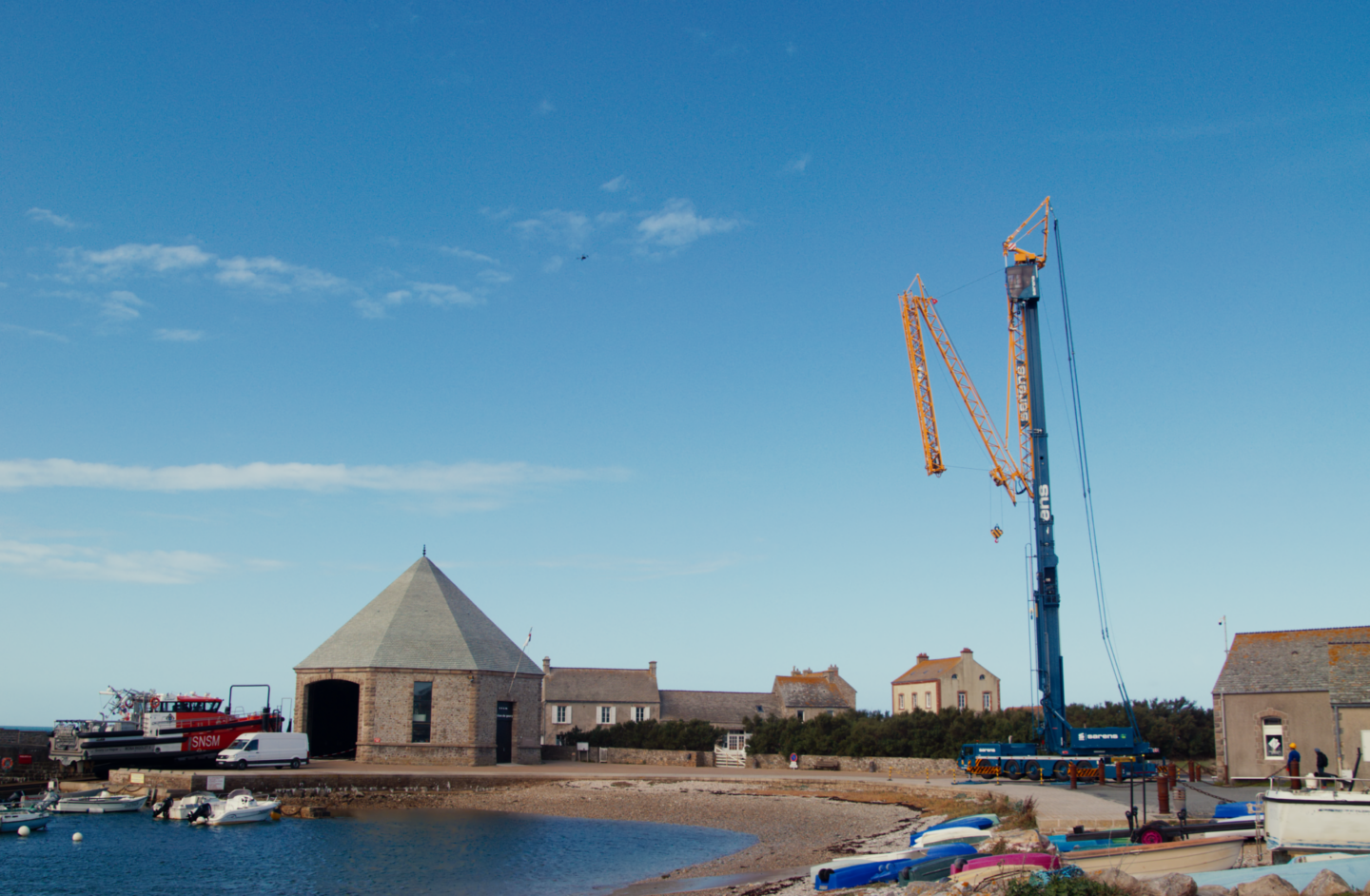
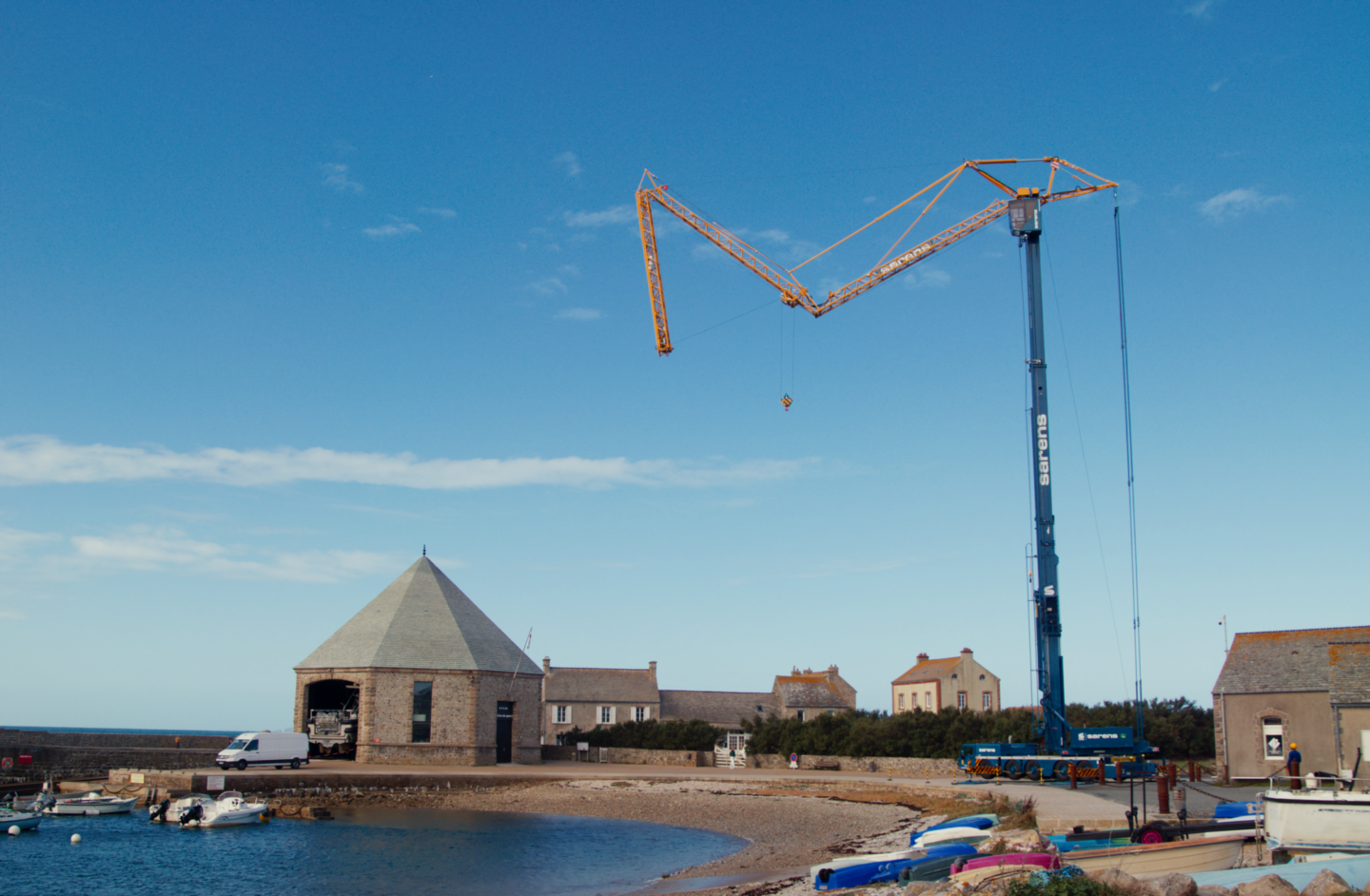
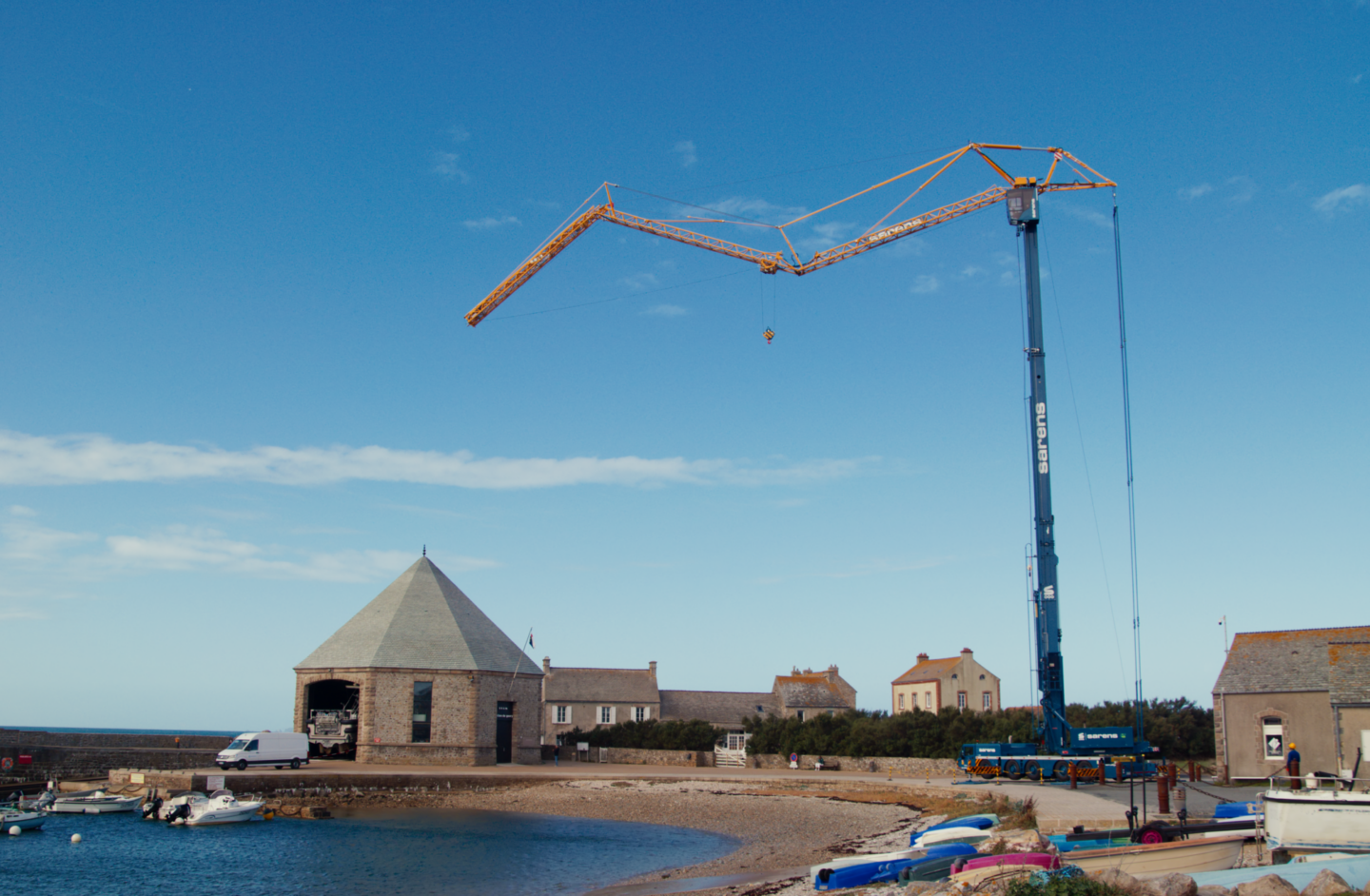
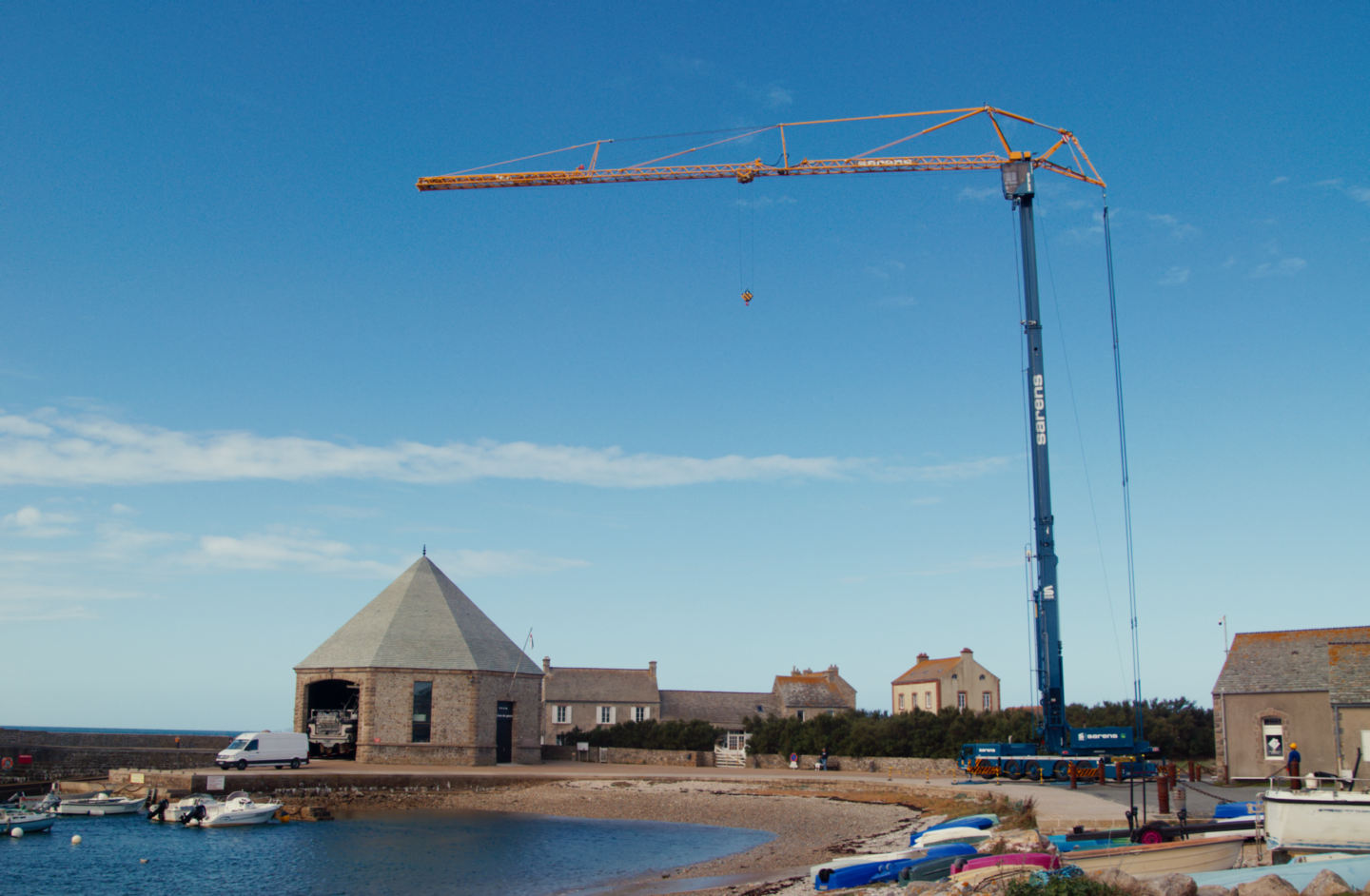
Set-up in 11 minutes

Automatic ballast detection system

Hydraulic crane movements

Renewed crane cabin with more comfort.
Set-up
Technical details


