


The tower crane on wheels. The best of both worlds.
A mobile tower crane is a tower crane on wheels, designed for maximum deployability on construction sites. Spierings was the first to ask: if the tower crane is the crane of cranes, why not make it mobile? From this idea, a new concept emerged in the 1980s: the mobile tower crane. Not a compromise, but a deliberate choice. By adding mobility to the tower crane principle, a crane was created that adapts to the job, rather than the other way around. The mobile tower crane is therefore developed for projects where flexibility, control, and continuity are essential.
Spierings mobile tower cranes
Discover our completely emission-free range.
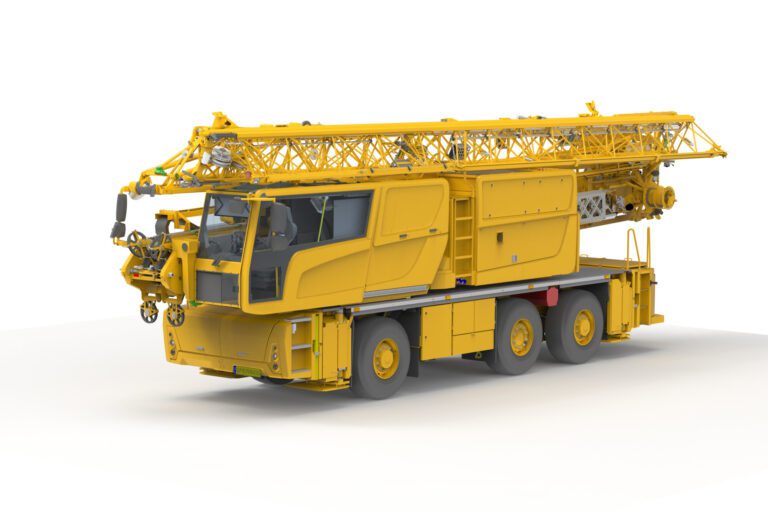
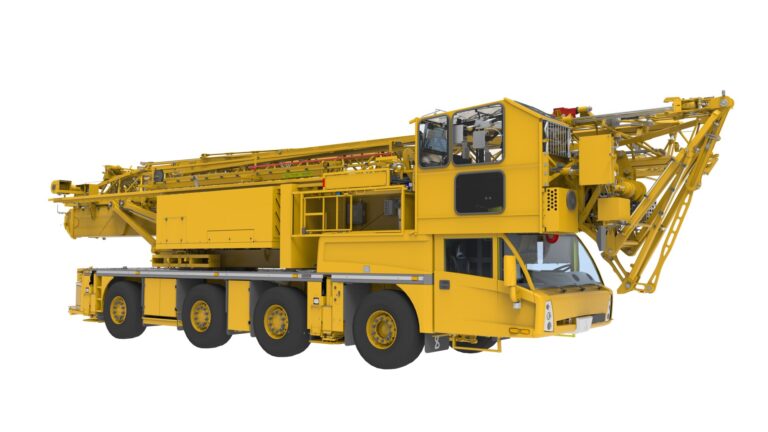

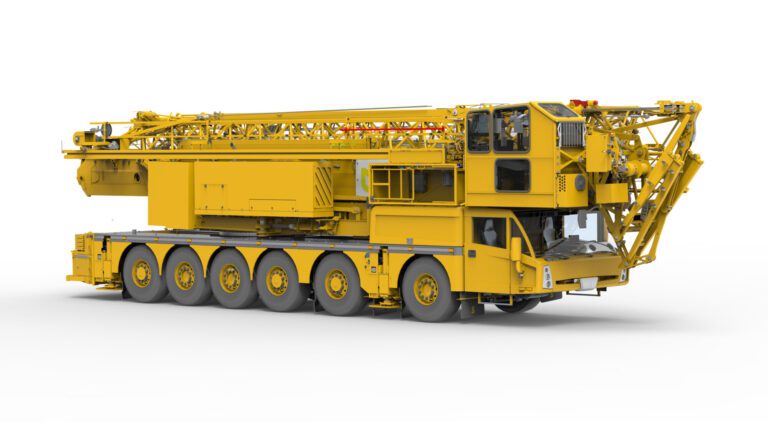

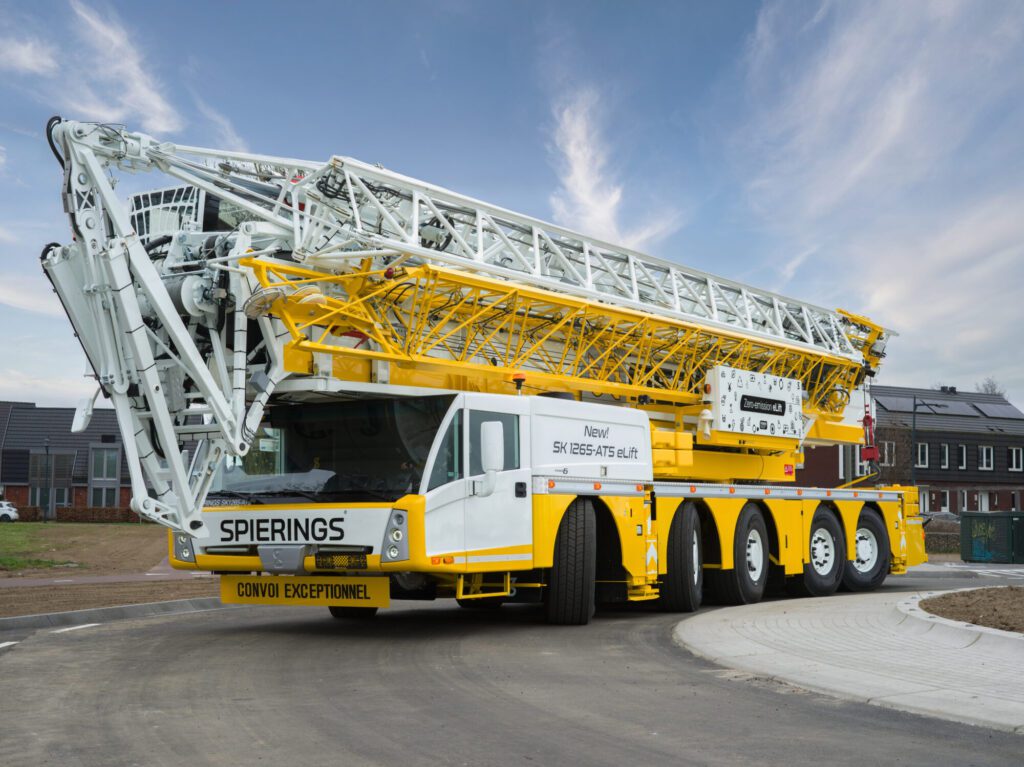
What is a mobile tower crane?
The tower crane is a familiar presence in the lifting industry. Large, recognizable, and functional. It is often seen on large-scale projects such as apartment buildings or office developments. Tower cranes offer significant reach and lifting capacity, but they also require longer setup times and considerable investment.
The mobile tower crane builds on this same principle and adds one essential element: mobility. The concept was introduced in 1987 by Spierings, based on the belief that lifting operations could be more efficient and flexible.
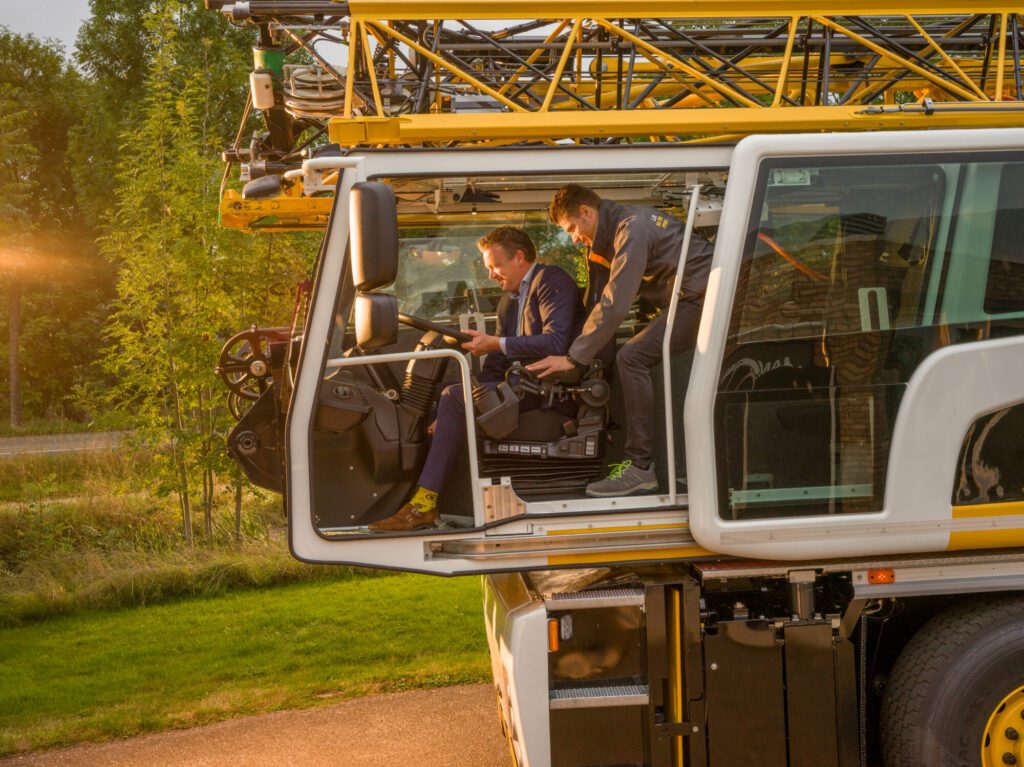
By placing a tower crane on wheels, a crane is created that does not require a fixed setup or lengthy preparation. This makes it suitable for situations where availability, flexibility, and continuity are critical.
The mobile tower crane is not a compromise between different crane types. It is a well-thought-out design that combines reach, stability, and mobility. Developed for professional construction companies, infrastructure projects, and crane rental companies that rely on maximum deployability and technology that performs reliably, even on large and complex projects.
This ensures operation remains possible at locations and times where space, energy, or environmental constraints would normally limit deployment. A mobile tower crane is quickly operational and can be used across multiple locations in a single day.
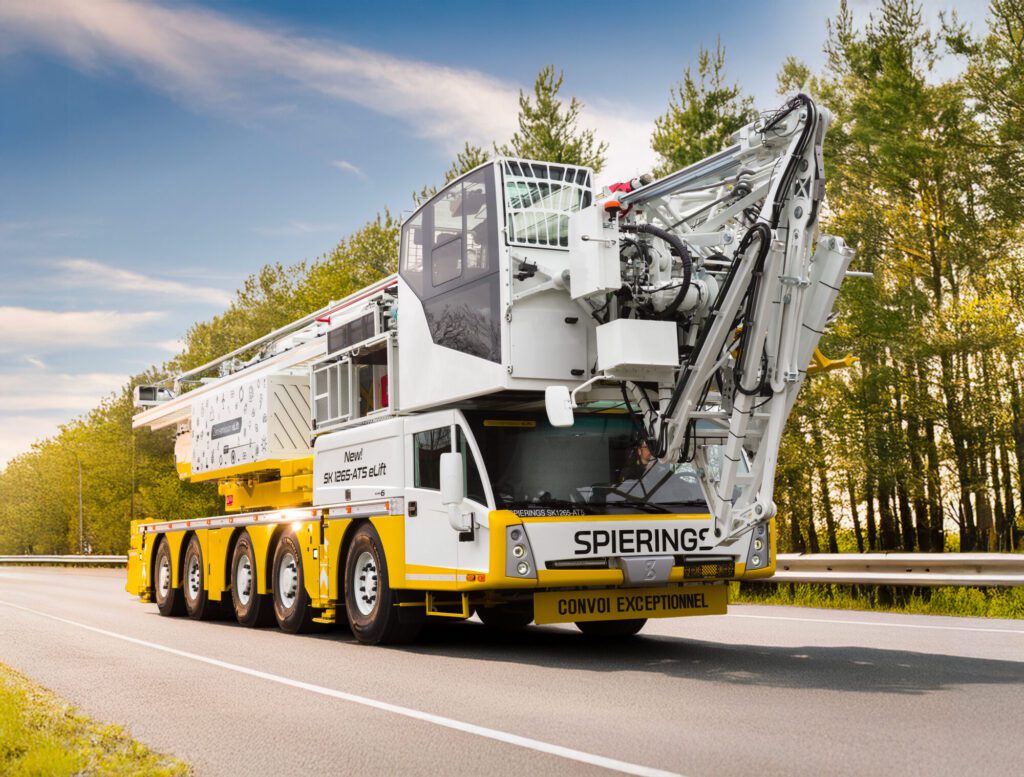
What characterizes a mobile tower crane:
- Combines the reach and lifting precision of a tower crane on a truck chassis
- Quickly deployable without lengthy preparation
- Suitable for inner-city and complex locations
- Designed for long-term use
- Efficient operation by a single operator
- Suitable for low-emission or fully electric lifting
- Operational within 8–15 minutes
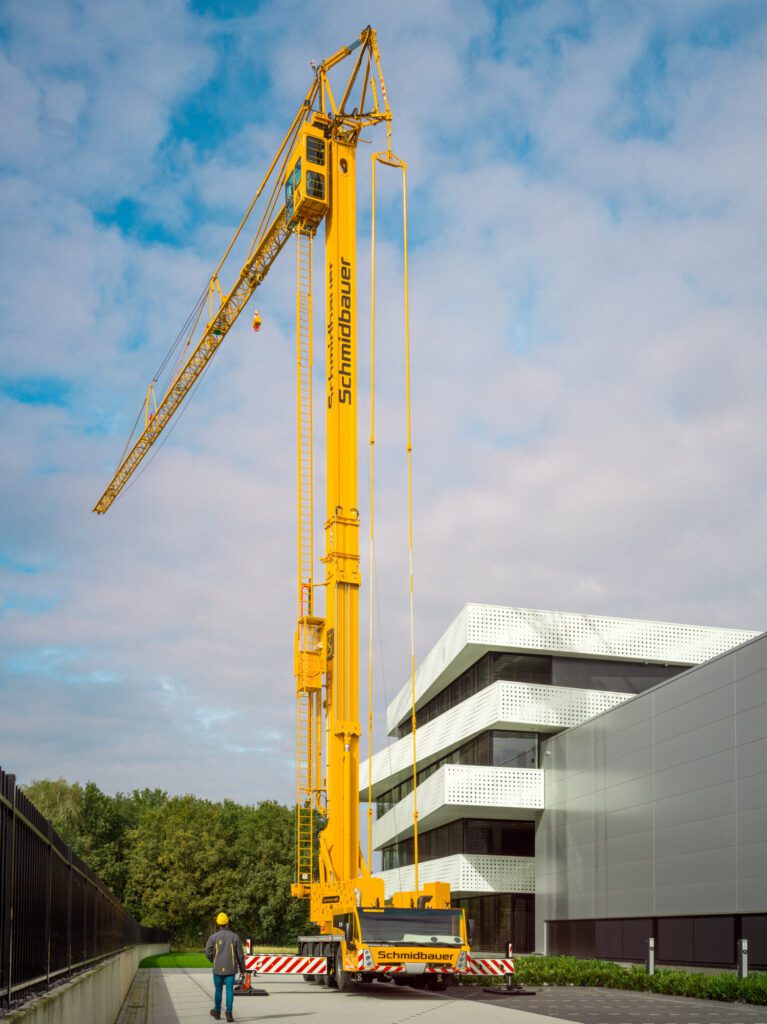
Mobile tower crane versus other cranes: what is the difference in practice?
In practice, the choice of crane is determined by technical requirements and site conditions. This includes reach, duration of use, and available space, but also logistics, energy supply, and noise and emission restrictions. Especially in urban environments and infrastructure projects, there is an increasing demand for cranes that can be deployed quickly, repositioned easily, and operate with minimal noise. For crane rental companies, this also plays a key role: broad applicability and predictable deployment determine profitability.
The most common types:
- Tower crane: large reach and lifting capacity, but fixed setup and longer preparation
- Mobile telescopic crane: quick to deploy and flexible, but less suitable for continuous lifting with large reach. Often requires additional equipment such as ballast transport and an assist crane
- Mobile tower crane: combines reach, stability, and mobility in one system
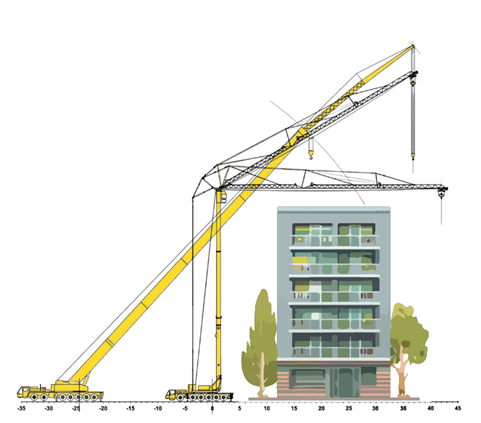
Traditional tower crane: large reach, but fixed setup
A traditional tower crane offers significant reach and lifting capacity and is often used for long-term projects. However, it requires a fixed setup, preparation time, and space around the installation area. Repositioning during the project is limited, which can require additional planning and logistics when conditions change.
Mobile telescopic crane: flexible, but dependent on ballast
Mobile telescopic cranes are quick to deploy and easy to relocate. They are suitable for short-term lifting tasks across multiple locations. However, they are less efficient for continuous lifting with large reach, as their configuration and work cycle are not designed for this purpose. Additionally, the use of ballast requires extra logistics. In contrast, a mobile tower crane requires fewer transport movements and offers more efficient on-site deployment.
Mobile tower crane: reach and mobility in one system
Within this spectrum, the mobile tower crane occupies a unique technical position. It is characterized by a structure consisting of multiple tower sections and a folding jib, combining reach and stability in a single system. It delivers the reach and stability of a tower crane without lengthy setup, combined with mobility and easy repositioning. Modern mobile tower cranes are also developed with a focus on low-emission and low-noise operation. This makes a significant difference, especially in urban environments and projects with strict emission requirements. Even with limited power supply, operation remains possible without compromising performance.
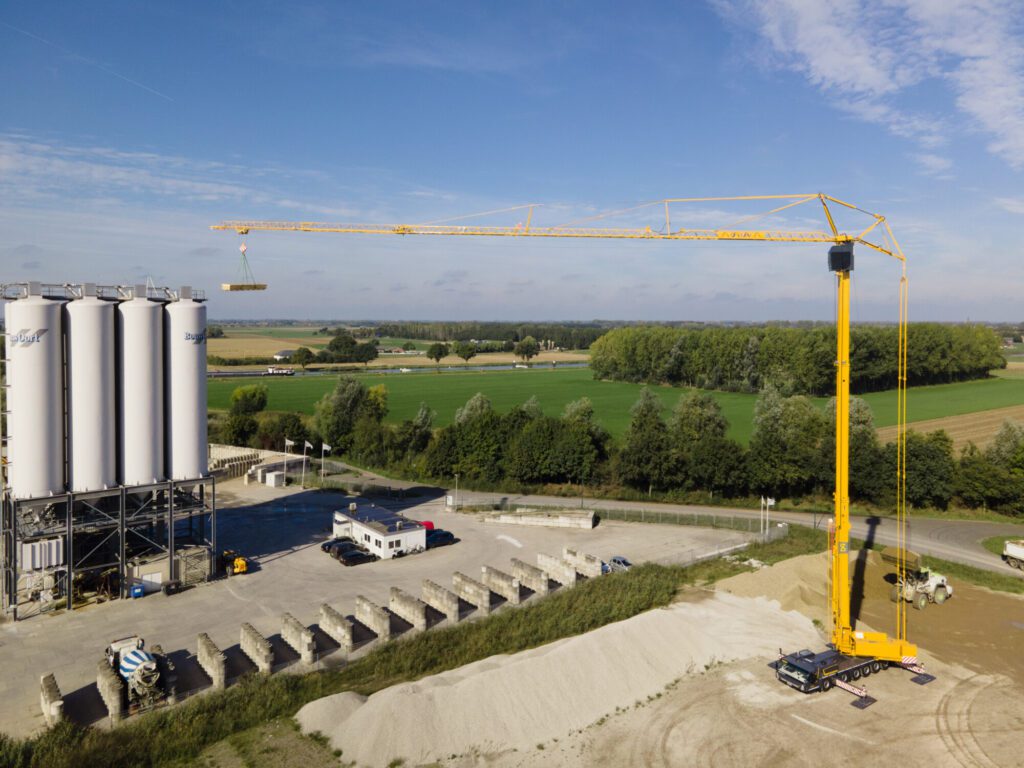
For construction and infrastructure projects, this means continuity and efficiency on site. For crane rental companies, it means a crane that is widely deployable, quickly transferable between projects, and efficient to operate. Choosing a mobile tower crane is therefore not a compromise, but a deliberate technical decision for situations where reach, deployability, and flexibility make the difference.
80% of lifting operations are carried out by mobile tower cranes
The mobile tower crane has evolved into a mature crane type within professional lifting operations. Around 80% of lifting tasks are carried out using mobile tower cranes. There are multiple manufacturers, each with their own design approach, focusing on aspects such as reach, mobility, energy supply, operation, or deployment duration.

The advantages of Spierings mobile tower cranes
In developing the mobile tower crane, Spierings has deliberately chosen a number of clear principles. Innovation is not about continuously adding new features, but about consistently improving what truly works in practice. This approach determines how the crane is deployed, how it is operated, and how it performs in real-world conditions. Together, these principles form the foundation of the Spierings mobile tower crane. They are reflected in daily use: reliable, efficient, and controlled.
100% electric lifting
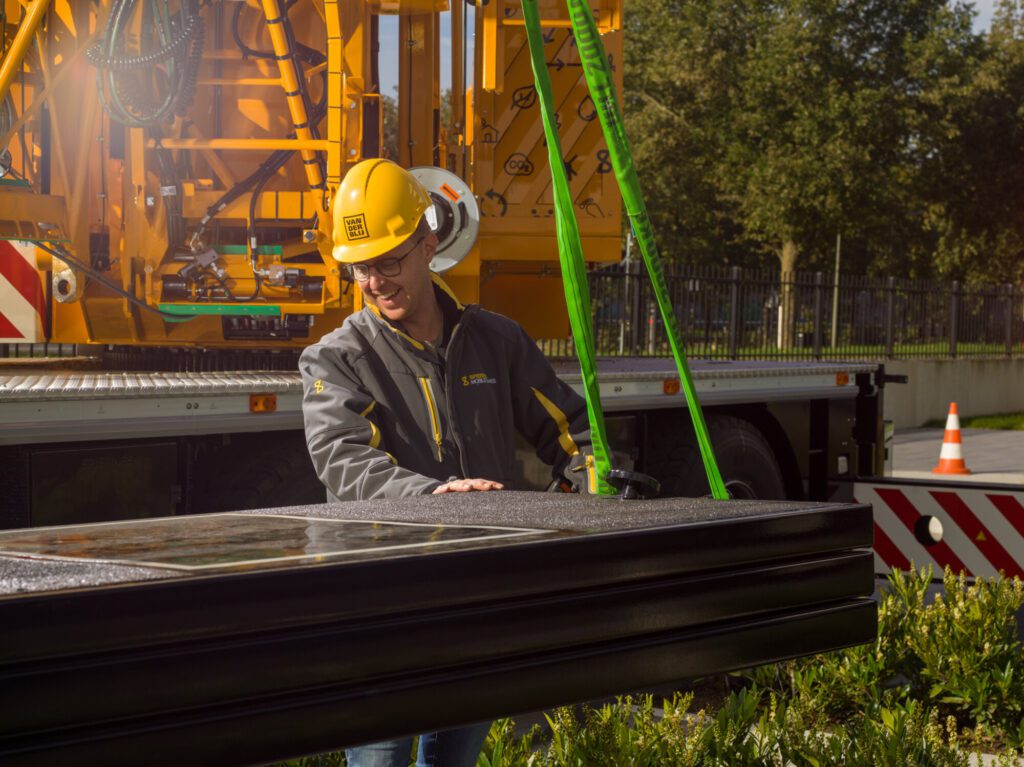
Spierings mobile tower cranes are designed for fully electric lifting. With the introduction of the eLift cranes in 2020, Spierings set a new standard. Since 2023, Spierings has stopped building and selling conventional diesel cranes, becoming the first manufacturer in the world to fully commit to sustainable hybrid models. Read more about this decision. Thanks to the integrated PowerPack® technology, daily operations can be carried out fully electrically, with a minimal power requirement of just 16A or 32A. Electric lifting enables controlled operation, minimal emissions, and significantly reduced noise levels. It allows deployment in locations where emissions and noise restrictions are increasingly decisive, without compromising lifting capacity, speed, or reliability.
Hydraulically proportional crane movements
All crane movements in Spierings mobile tower cranes are hydraulically proportionally controlled. This ensures a direct and predictable response to every input. The result is maximum precision and efficiency, even during repetitive lifting operations or complex load manoeuvres. The crane responds exactly as expected, contributing to controlled lifting and a calm working environment.
Efficient and fast deployment
Spierings mobile tower cranes are designed as complete systems. Thanks to the automated erection process, the crane is operational within a short time—typically within 8 to 15 minutes. In practice, this enables deployment across multiple locations per day. This speed and simplicity reduce on-site logistics and increase flexibility in changing schedules. The crane adapts to the job—not the other way around.
One job, one man
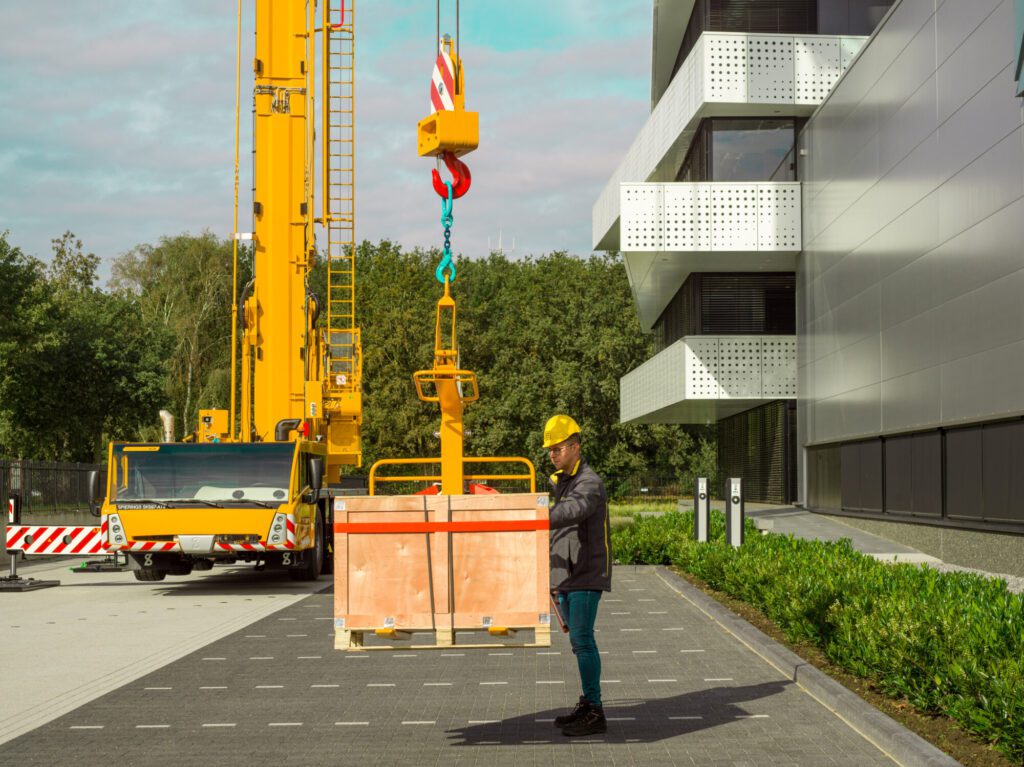
The design of Spierings mobile tower cranes is tailored for operation by a single crane operator. Setup and operation are configured in such a way that no additional ballast, jib sections, or extra personnel are required. This one job, one man philosophy enhances safety, reduces labor pressure, and keeps the lifting process clear and under control.
Innovation in mobile tower cranes: continuously evolving
Innovation at Spierings is an ongoing process. The mobile tower crane originated from a single idea: making a tower crane mobile. Since then, the concept has been continuously developed step by step, always with the same focus on simplicity, deployability, and reliability.
New developments are driven by real-world use. Feedback from operators, insights from service, and data from usage (Spierings Smart Connect) are directly translated into design improvements. Not to add more features, but to make the crane perform better in everyday operations.
Development and production take place entirely in the Netherlands. This makes Spierings a 100% Dutch product, where engineering, manufacturing, and practical experience come together seamlessly.
The future: electric mobile tower cranes
The world is changing. This applies to construction, infrastructure, and industry, but equally to lifting operations. Stricter emission standards, increasing scarcity of resources, and higher demands on the living environment and safety make it clear that technology must continue to evolve. Standing still is not an option.
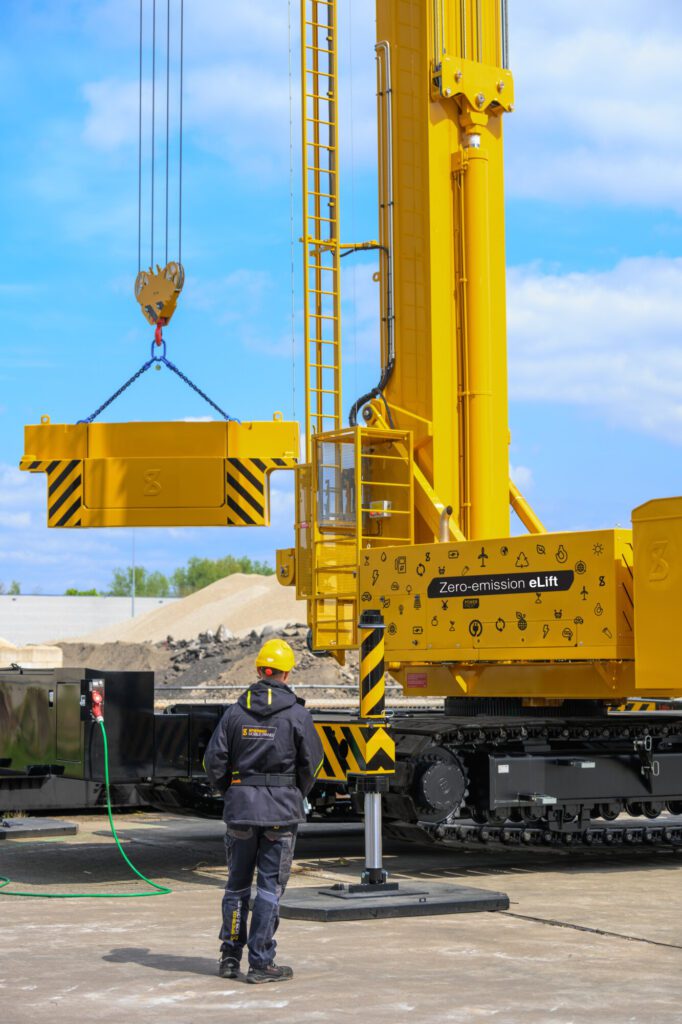
Especially in urban environments, conditions are becoming increasingly demanding. Limited space, permit requirements, fixed working hours, and stricter regulations on noise and emissions increasingly determine how and when lifting operations can take place. This requires cranes that not only perform technically but also adapt to their surroundings. Driven by this vision, Spierings took the next step in the development of the mobile tower crane in 2023. Since then, Spierings has exclusively produced hybrid cranes. These innovative eLift cranes can operate fully electrically during daily operations, using just a 16-amp construction power connection.
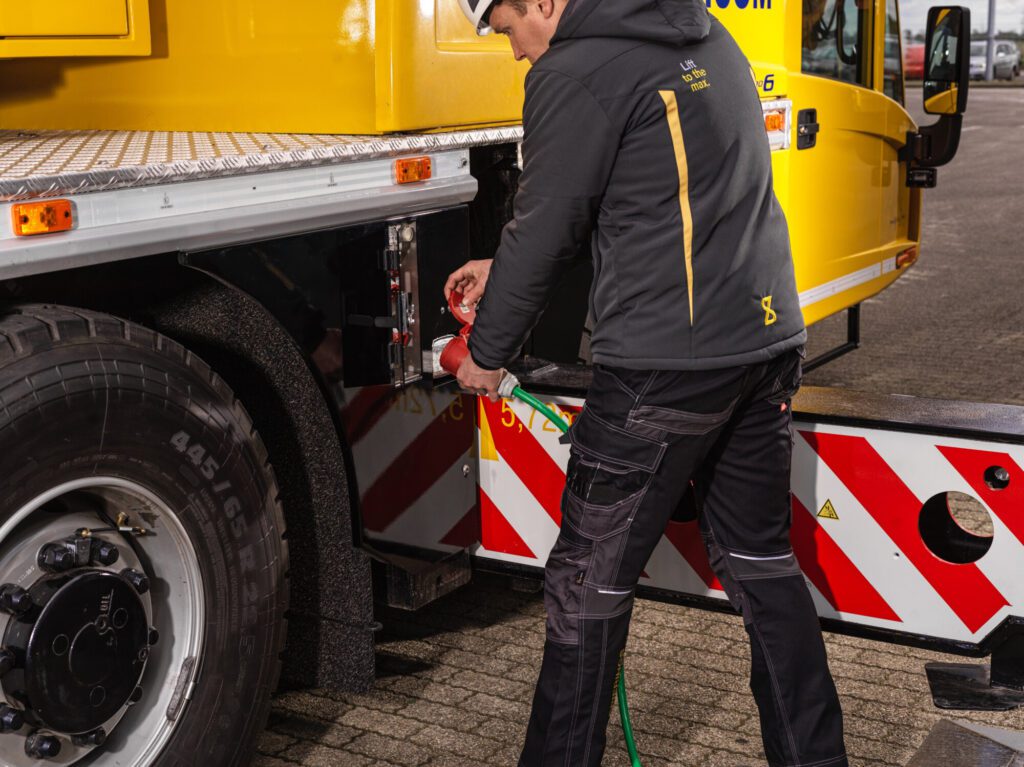
This development was not driven by regulations, but by a fundamental question: how can lifting operations remain reliable, deployable, and responsible in the long term? This has led to a new generation of mobile tower cranes in which electric lifting is central. Electric lifting means minimal CO₂ emissions, significantly reduced noise, and lower operational costs. It enables deployment in locations and at times where other cranes increasingly face limitations, such as inner-city projects, emission zones, and noise-sensitive environments.
With its eLift models, Spierings combines mobility, reach, and performance with low-emission lifting, without compromising safety, reliability, or deployability. As a result, Spierings remains, to this day, the first and only manufacturer in the world fully focused on electric lifting with mobile tower cranes—setting the standard for the industry.
Stay up to date with the latest developments, innovations, and insights.
News and updates

Frequently asked questions about mobile tower cranes
What is a mobile tower crane?
What sets this crane apart is how it is used in practice. The crane is self-erecting and typically operational within 15 minutes, without the need for an assist crane. Operation is designed for a single operator: one man, one job.
Thanks to its compact design, the crane can be positioned close to the building while still covering the entire project. This results in fewer transport movements, reduced labor requirements, and lower emissions, while maintaining construction progress.