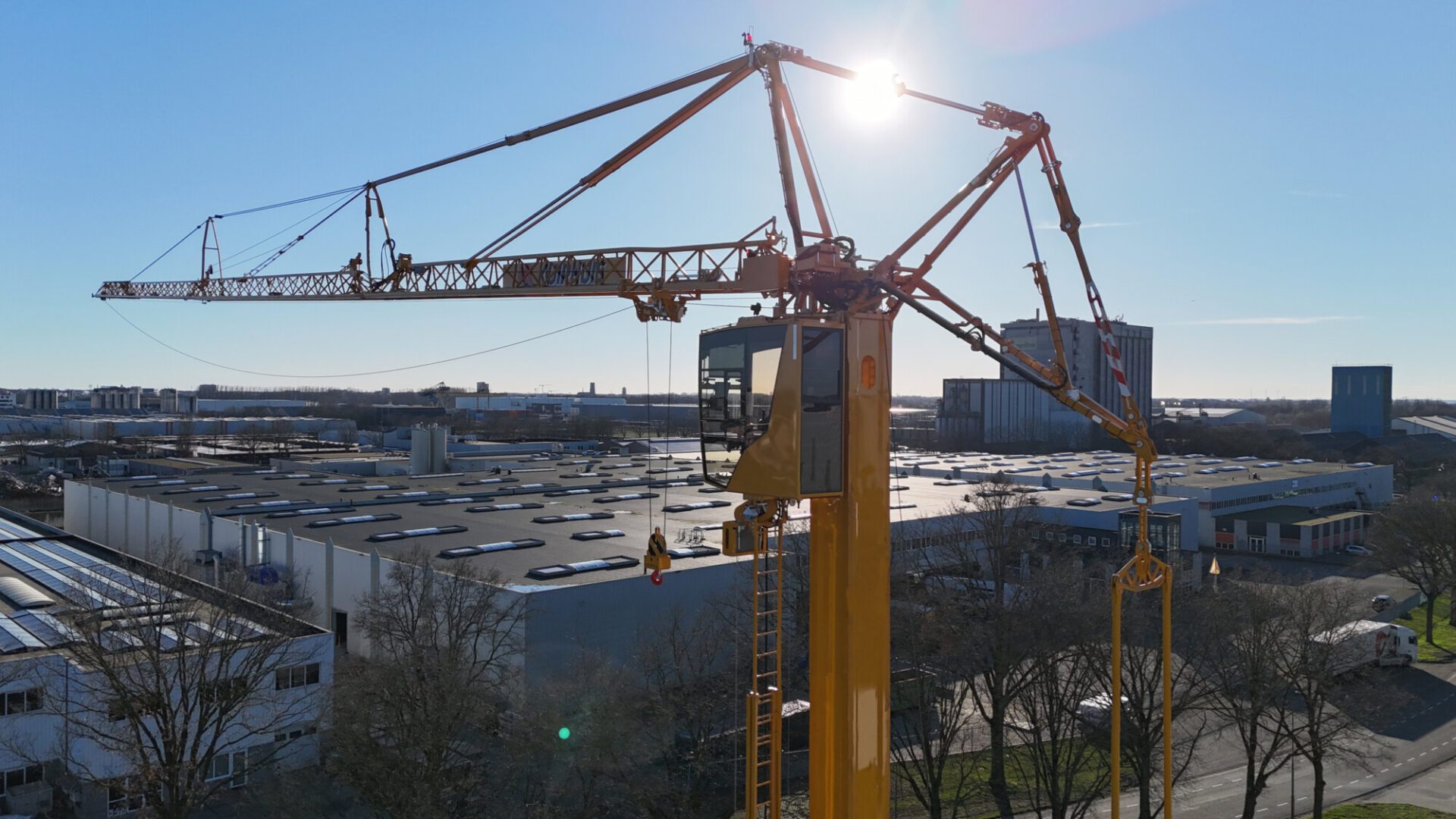
Designed for and by the crane operator
The crane cab is an integral part of the mobile tower crane. This is where the crane operator works every day, often during long working days in which concentration and control are essential for safe lifting operations. The layout of the cab directly determines how comfortably, safely and controllably the operator can work. Clear sightlines from the cab provide a full overview of both the load and the working environment, enabling the operator to work with precision and control. That is why the design of the Spierings crane cab is based on three core principles: comfort, ergonomics and safety.
At a glance:
- Comfortable and spacious crane cab
- Pleasant interior climate thanks to climate control and high-quality insulation
- Fully adjustable seating position with forearm support
- Extensive glazing and clear sightlines
- Logical controls with touch protection
- Structurally integrated safety features
Space and light in the crane cab
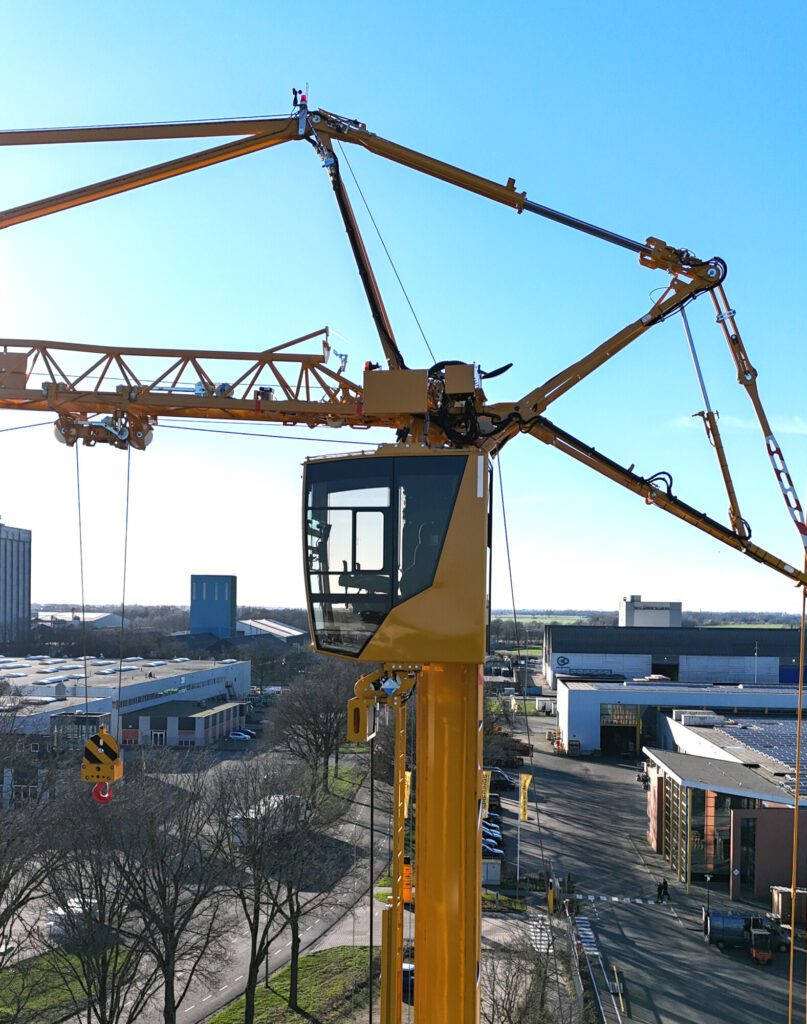
Long periods of lifting work require a working environment that provides calm and stability. Comfort is not created by a single feature, but by the combination of visibility, climate control and acoustics. The cab is carefully insulated and sealed. Outside noise is reduced, and weather influences such as rain and wind are effectively kept out. This creates a calm working environment in which the operator can focus on lifting operations without unnecessary distractions.
Visibility plays an important role in this. The cab features extensive glazing all around, giving the operator a clear view of both the load and the immediate working environment. The glass surface area contributes not only to safety, but also to a sense of space and overview.
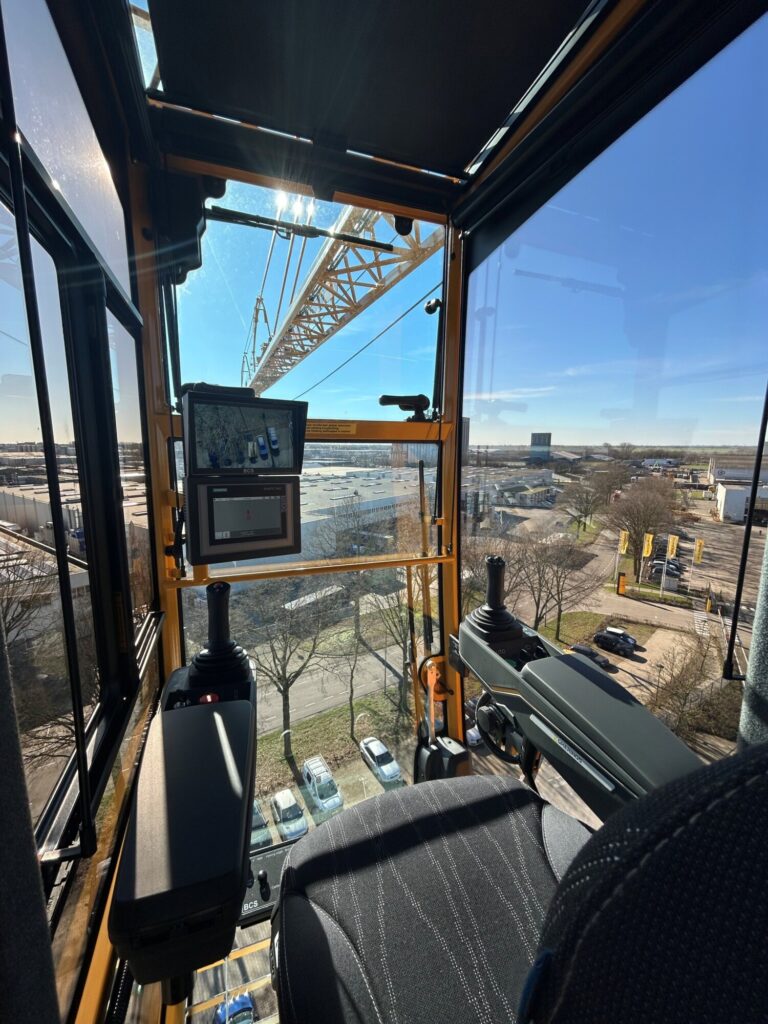
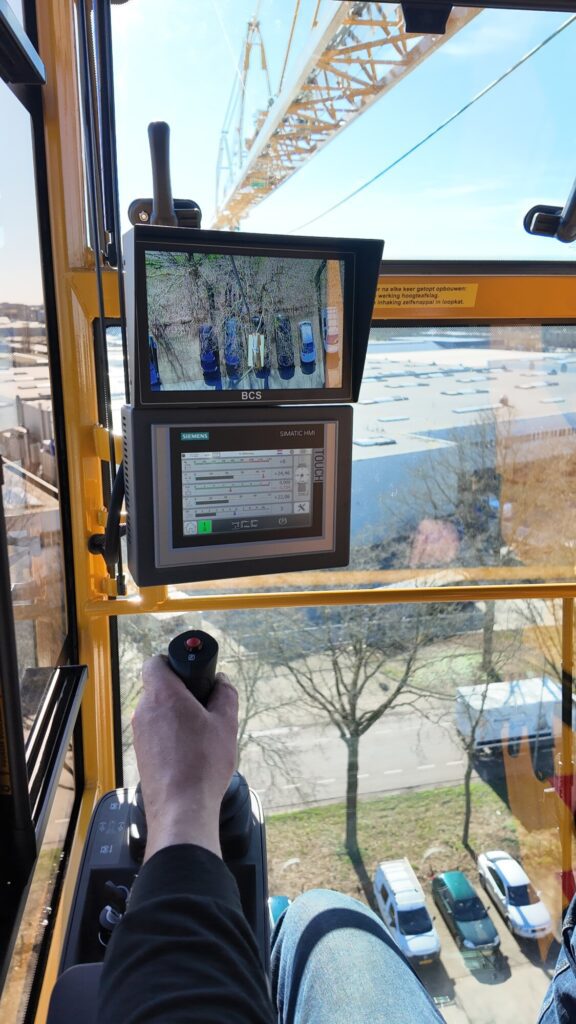
The display console has been designed in a compact format and positioned deliberately. By placing the displays within easy reach and within the natural field of vision, the working area remains as visible as possible.
Sliding windows on the left-hand side and at the rear allow for natural ventilation. The front window is infinitely adjustable thanks to hydraulic dampers, making it easy to position as required. Solar control glass reduces excessive sunlight without limiting visibility to the outside. In addition, the cab is fitted with integrated roller blinds. Blackout roller blinds are used for the roof window and the rear window. The other windows are fitted with light-filtering roller blinds that reduce glare while maintaining visibility to the outside. This allows the operator to easily adapt the light conditions inside the cab without losing overview of the working area.
Climate control and insulation
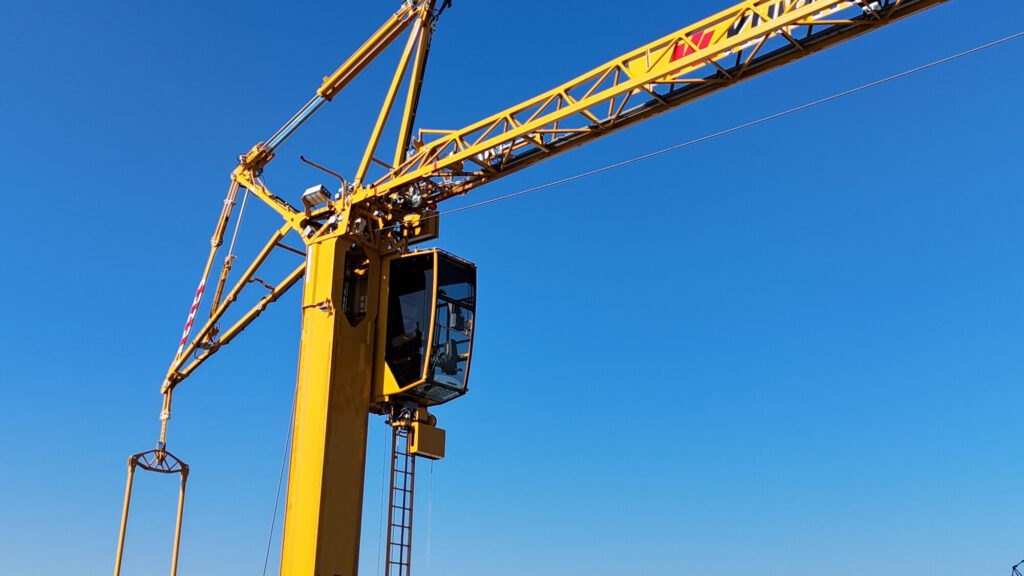
A stable interior climate is a technical requirement for comfortable working. That is why the crane cab is equipped with climate control and increased air conditioning capacity. Temperature and ventilation remain manageable, even during intensive use or changing weather conditions.
Electrically heated front windows prevent the glass from misting up. The heating can already be switched on from ground level, allowing the operator to start work at height immediately with clear visibility. This avoids waiting time and supports a smooth start to the working day.
Good insulation also helps reduce heat loss and external noise levels. Comfort in the crane cab is therefore not a luxury, but part of a well-thought-out working environment.
Ergonomics in the crane cab
Ergonomics is all about the interaction between operator and machine. In the crane cab, this means that seating position, arm position and controls form one logical whole.
Fully adjustable seat
The seat is adjustable in height, depth and tilt. This makes it possible to tailor the seating position to the operator, creating a stable and relaxed working posture. This is important during long lifting cycles in which repetition and precision go hand in hand. The foldable footrest also makes it easy to clean underneath the seat.
Adjustable armrests
The armrests support the full forearm and are adjustable both horizontally and vertically. The ability to tilt the armrest creates a natural position towards the joystick. This helps reduce physical strain on the shoulders and arms. The left armrest is fully foldable, making access easier and providing additional freedom of movement. Ergonomics lies in the details: the right adjustment makes the difference between working and working comfortably.
Safety in the crane cab
Safety is not a separate layer, but an integral part of the cab design. Measures have been incorporated both in the construction and in the controls to reduce risks.
Lift and access
The lift to the cab is equipped with a hinged door and locking mechanism. During descent, an acoustic signal is given at a height of two metres and the cab lift stops briefly. This reduction in speed increases safety for people around the crane.
Controls
The joysticks have a straight grip, are light to operate and are fitted with touch protection. Crane movements are only carried out through deliberate operation. This supports controlled lifting operations and reduces the risk of unintended movements.
Controls
The joysticks have a straight grip, are light to operate and are fitted with touch protection. Crane movements are only carried out through deliberate operation. This supports controlled lifting operations and reduces the risk of unintended movements.

Join the Spierings Crane Operators Community
Day in, day out, Spierings operators work with our cranes on projects at home and abroad. They know the reality of the job better than anyone. Their craftsmanship, commitment and experience form an important foundation of our company. Without crane operators, there is no Spierings.
That is why we created the Spierings Crane Operators Community.
This community brings operators together. A place where experiences are shared, knowledge is exchanged and practical questions can be discussed. A network of professionals working with the same technology and strengthening one another.
Benefits of the Spierings Crane Operators Community
- Stay up to date with news and innovations
- Summer and winter tips
- Share your Lift to the Max. moment with us and the other members
- Gifts & Awards
- Discount on Spierings merchandise
- Share your tips from the field
Do you work with a Spierings crane every day? Join our Spierings Crane Operators Community. Membership is free.
Join our community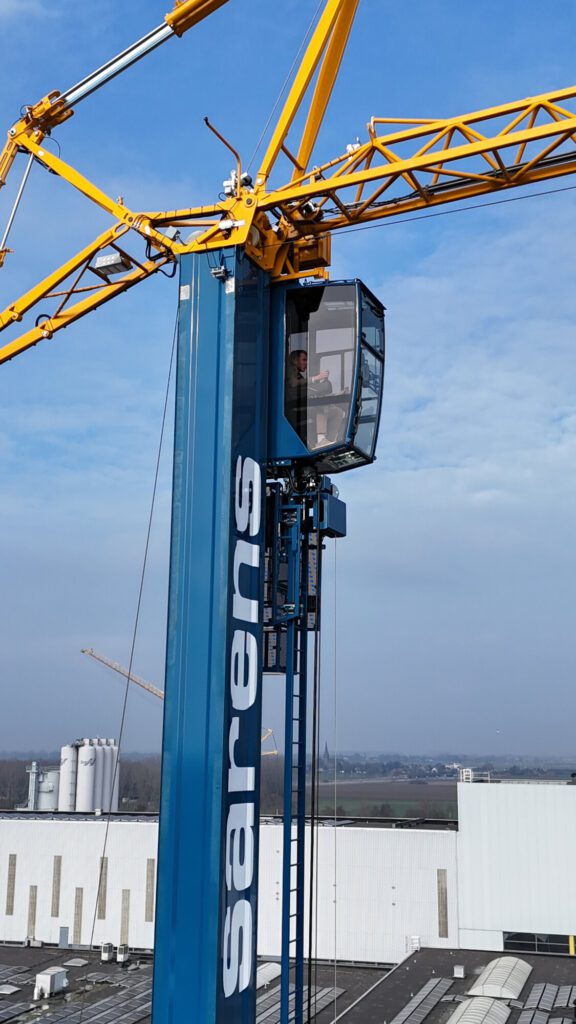
Designed for and by crane operators
The crane cab is the place where the operator spends most of the working day. Comfort, overview and control are therefore not extras, but essential conditions for safe and efficient lifting operations.
The original cab design dates back to the 1990s and has proven itself in practice for many years. The current version, in use since 2026, builds on that foundation and reflects the way work is done today: longer working days, challenging lifting movements and changing conditions in which visibility, calmness and control are decisive.
The cab was developed in cooperation with cab builder YPCAR, together with Spierings R&D, improvement and product specialists, and crane operators. Practical experience and technical expertise have been brought together in one design that not only works on paper, but is used every day in practice.
Frequently aasked question about the crane cab
What is a crane cab?
What makes the Spierings crane cab ergonomic?
How is the seating position in the crane cab adjustable?
How does the joystick in the crane cab prevent unintended crane movements?
What does the 2-metre safety feature do when the lift descends?
What is the function of the chuteline?
Does the Spierings crane cab have climate control?
What does the electrically heated front window do in a crane cab?
Why is extensive glazing important in a crane cab?
Which models use the Spierings crane cab?
Want to know more about the Spierings crane cab?
Get in touch with Tim Leech. He will be happy to tell you more about the technical possibilities, ergonomics and practical use.