Crane operators may have the best view of the entire project. From the crane cab, they oversee the full site and maintain control over the lifting operations. Sightlines are crucial to both safety and efficiency. What an operator can see determines how controlled the work can be carried out. Without clear and unobstructed visibility, precise and safe lifting is not possible. Visibility is therefore not a detail in the design, but a condition for carrying out the work in a controlled and safe way. In this blog, you will read why sightlines are decisive for safety, physical strain and efficient lifting operations.
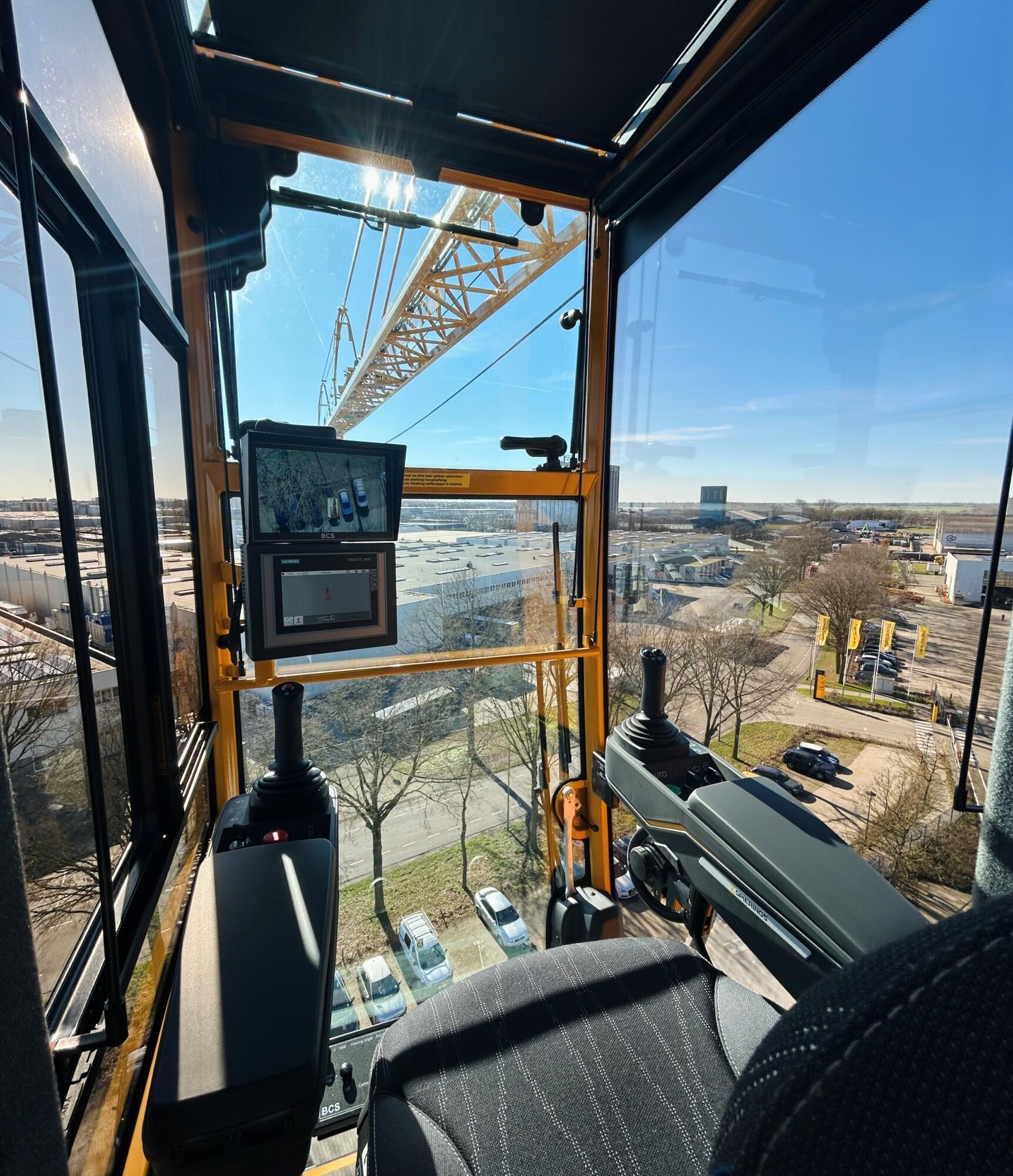
By sightlines, we mean everything the operator can see from a normal working posture: the load, the boom and the immediate working environment. The amount of glass, the position of the pillars and the placement of screens together determine how unobstructed that view is. When these elements are properly aligned, the operator can remain seated in a natural posture while maintaining a clear overview. There is no need to twist or lean forward to follow the load. This reduces physical strain and supports controlled working. Sightlines in the crane cab therefore have a direct impact on the safety, physical load and efficiency of lifting operations.
Safety starts with seeing what is happening
On construction sites and in inner-city projects, the situation is constantly changing. People move around the crane, vehicles enter and leave the site, and materials are being relocated. In these circumstances, clear and unobstructed visibility is essential. The faster an operator notices a change, the faster they can respond.
When the field of vision is restricted, reaction time increases. This raises the risk of errors or unsafe situations. Unobstructed visibility shortens the time between observation and action. Safety therefore literally starts with being able to see what is happening.
Less physical strain through better visibility
A crane operator works from a fixed position in which accuracy and concentration are essential. During lifting operations, many small and controlled movements are carried out. That is why it is important that the operator can remain seated comfortably while continuing to follow the work properly.
When sightlines are well designed, the crane operator can maintain a stable seated posture while keeping both the load and the surrounding environment in view. This prevents unnecessary twisting movements and supports prolonged, focused working.
Efficient lifting operations require overview
Good visibility affects not only safety and comfort, but also efficiency. Lifting operations require smooth and predictable movements. When an operator can follow the load continuously, movements become steadier and more precise. Restricted visibility more often leads to small corrective actions, which costs time and interrupts the workflow.
Efficiency is therefore not determined only by lifting capacity or crane speed, but also by the quality of visibility from the crane cab.
Visibility as part of responsible cab design
Cameras and sensors support the work, but they do not replace direct visibility. Direct visibility provides depth, context and overview briefly. That is why the glass surface area in the crane cab remains a fundamental design choice.
Within the construction industry, guidelines for mobile tower crane cabs pay attention to visibility, working posture and physical strain. These guidelines emphasise that operators must have sufficient overview of both the load and the working environment from their normal working position. Visibility is therefore not an aesthetic choice, but part of responsible cab design.
Sightlines in the crane cab are therefore not a detail. They are a prerequisite for safe and efficient lifting operations.
Safe and efficient in the Spierings crane cab
Good visibility is not a luxury. It is the foundation of controlled lifting operations. Curious to learn how we apply this in our crane cab? Contact us for more information. Are you a crane operator? Join our community and stay connected to daily practice.